
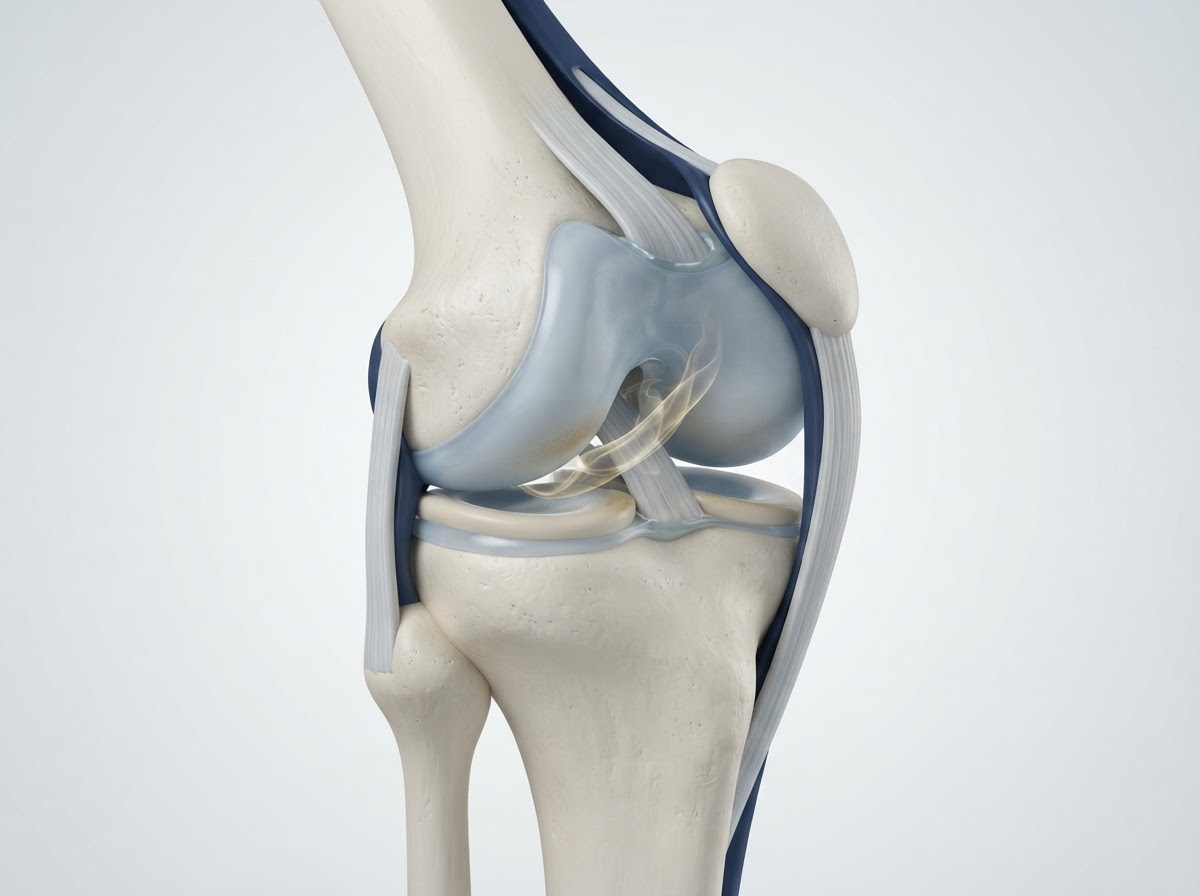
Knee osteoarthritis is one of the most common reasons people seek orthopaedic advice, and many patients become interested in biological or 'regenerative' treatments such as platelet-rich plasma (PRP) when conventional measures no longer control their symptoms. PRP is an autologous blood-derived preparation that has been investigated as an option for selected patients with knee osteoarthritis. This article explains what PRP is, how it is thought to act, what clinical research actually shows, who might be a candidate, and its limitations — so you can have a better-informed conversation with your orthopaedic surgeon. It is intended to educate, not to promise results, and PRP is not presented here as a cure for osteoarthritis or a proven way to regenerate lost cartilage.
What is platelet-rich plasma?
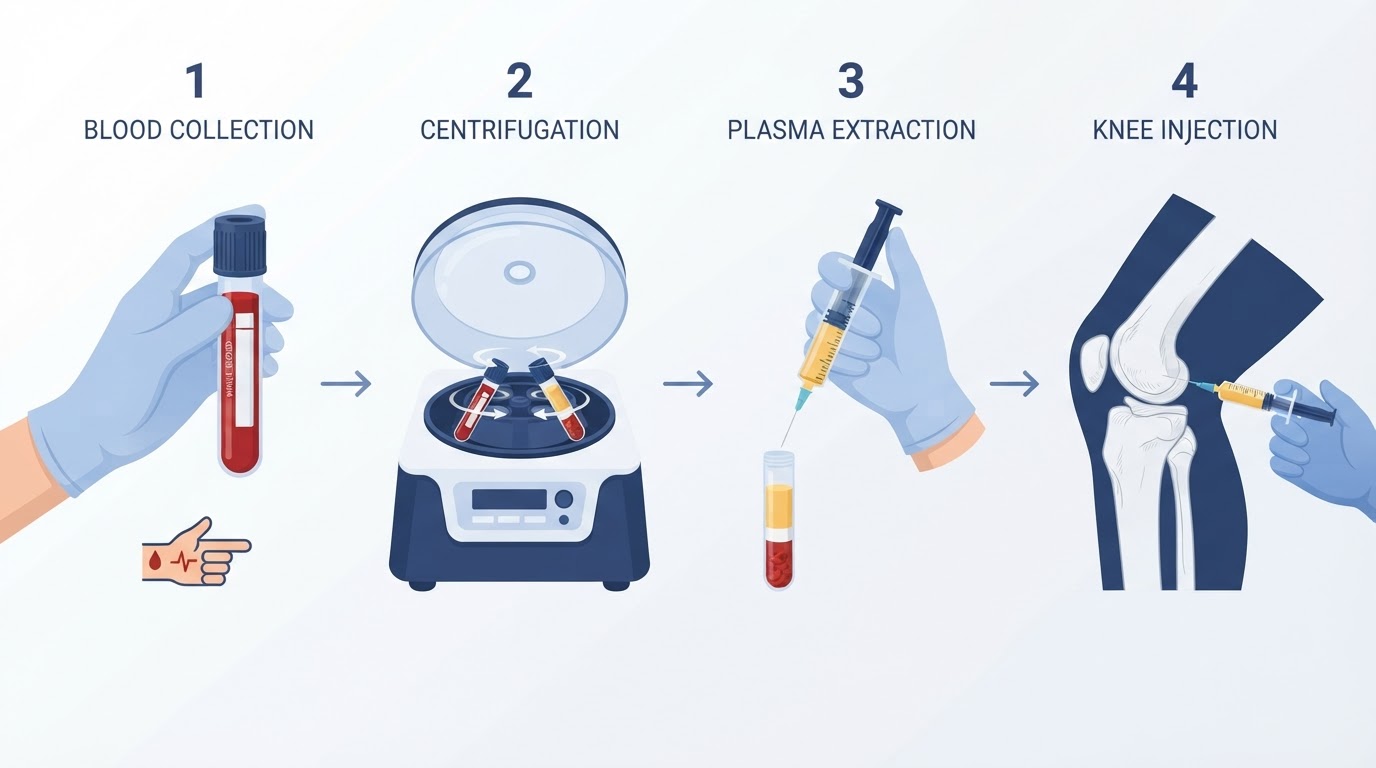
Platelet-rich plasma (PRP) is a preparation made from a sample of your own blood, which is why it is described as autologous. The blood is centrifuged to separate and concentrate the platelets, and the resulting platelet-rich fraction is injected into the knee joint (an intra-articular injection) when clinically indicated. Platelets are small blood components best known for their role in clotting, but they also carry a range of growth factors and bioactive proteins — including platelet-derived growth factor, transforming growth factor beta and vascular endothelial growth factor — that take part in tissue-repair signalling. The basic preparation principle is therefore straightforward, but the product itself is not: platelet concentration, the volume injected and the way the blood is processed all vary between systems. The injection is administered into the joint space, often with ultrasound guidance where clinically appropriate to improve the accuracy of placement. PRP has not been shown to regenerate articular cartilage in humans or to reverse established osteoarthritis; its possible role is in symptoms, not in restoring lost structure.
How might PRP work in knee osteoarthritis?
The biological rationale for PRP in knee osteoarthritis is that the growth factors and signalling molecules released by platelets may modulate inflammatory pathways within the synovial environment, influence cellular communication in the joint, and interact with cartilage metabolism in ways that could affect pain and joint function. These are proposed mechanisms — biological hypotheses about how the treatment might act — and it is important to distinguish them from clinically demonstrated outcomes. A plausible mechanism is not the same as a proven clinical effect, and laboratory findings do not automatically translate into symptom relief in a patient. PRP has not been shown to regenerate articular cartilage in humans or to reverse established osteoarthritis.
What does clinical research show?
The evidence on PRP for knee osteoarthritis is mixed, and different reviews and guidelines reach somewhat different conclusions, so a balanced reading matters more than selecting a single favourable result. A 2024 technology overview from the American Academy of Orthopaedic Surgeons evaluated the available clinical research on PRP for knee osteoarthritis and compared it with several treatment alternatives; a technology overview assesses the body of evidence and should not be read as a definitive clinical-practice recommendation. A 2024 consensus from ESSKA and the International Cartilage Repair Society considered PRP appropriate in selected patients — particularly those with symptomatic knee osteoarthritis graded KL 0–III after unsuccessful conservative or injectable treatments — but did not support routine first-line use or use in KL IV disease; this is a consensus on appropriateness in defined scenarios, not a guarantee of individual response. A 2025 systematic review and meta-analysis pooling 21 randomised controlled trials comparing PRP with placebo or corticosteroid suggested possible improvements in pain and function but emphasised the heterogeneity of the evidence. A separate 2025 meta-analysis comparing intra-articular PRP with placebo found limited benefit at certain short-term follow-up points and no demonstrated benefit at 12 months in the pooled analysis — findings that challenge overly optimistic claims. A 2026 guidance statement from the American Academy of Physical Medicine and Rehabilitation, incorporating evidence through June 2025, considered PRP in selected patients with mild-to-moderate osteoarthritis who remain symptomatic despite conservative treatment and stressed patient selection, PRP formulation, platelet dose, image guidance, rehabilitation and individualised decision-making. The 2026 VA/DoD clinical practice guideline for the non-surgical management of hip and knee osteoarthritis reached a more cautious conclusion, citing concerns about study quality, heterogeneity and insufficient certainty to support a recommendation for PRP. It is normal for guidelines to differ: they use different evidence-assessment methods, consider different populations and set different thresholds before recommending a treatment. Presenting only the favourable view would mislead patients.
Which patients may benefit?
Whether PRP might be appropriate is a clinical decision that should consider symptoms, functional limitations, the radiographic severity of osteoarthritis, previous conservative treatment, comorbidities, relevant risk factors and patient expectations. Mild-to-moderate osteoarthritis is usually considered separately from advanced structural disease. Radiographic grading (such as the Kellgren-Lawrence grade) is a classification of what is seen on imaging; it does not replace clinical assessment and does not by itself determine whether someone will benefit. Patients with mild or moderate disease and persistent symptoms despite appropriate conservative treatment are the group most often discussed for PRP. Advanced osteoarthritis may respond differently, and PRP is not a substitute for joint replacement when surgery is indicated; advanced structural disease may require different strategies, including surgical assessment. No patient should be promised a benefit.
PRP preparation: why does it matter?
PRP is not a single standardised product, and different preparations should not automatically be considered equivalent. Preparations vary in platelet concentration, leukocyte (white blood cell) content, red-blood-cell contamination, activation characteristics, total platelet dose and injection volume. Preparations are often described as leukocyte-rich or leukocyte-poor, and these differences may influence the biological properties of the product. Preparation systems, centrifugation steps and processing details also differ between clinics. These differences are one reason published studies do not always agree, and why results from one preparation cannot be assumed to apply to another. The preparation used, and the protocol followed, are part of what determines how a given treatment behaves.
How many injections are needed?
There is no universally established injection schedule for PRP in knee osteoarthritis. The number of injections, the interval between them and the platelet concentration depend on the preparation system and an individualised clinical decision. Some protocols describe a single injection, others a series spaced over weeks; none has been proven optimal for all patients. This article does not prescribe a number of injections, intervals or doses — those details should come from a specialist who has assessed your knee, not from an online article.
PRP and cartilage regeneration
It is important to distinguish three different things: improvement in symptoms (such as pain), improvement in function (such as walking capacity), and structural regeneration of articular cartilage. PRP has not been shown to reliably regenerate damaged articular cartilage in humans or to reverse established osteoarthritis. Reported effects, where present, relate to symptoms and function, not to restoring lost cartilage. Claims that PRP regrows cartilage or cures osteoarthritis are not supported by the current evidence.
PRP compared with other treatments
Knee osteoarthritis is usually managed with a combination of measures rather than a single treatment. Exercise and physiotherapy are central to conservative management and help maintain function and muscle support around the joint. Where clinically appropriate, weight management can reduce load on the knee. Analgesics and anti-inflammatory medication have a role, but their use, benefits and risks need individualised medical advice. Intra-articular corticosteroid injections are used in selected situations for a different therapeutic purpose — short-term symptom relief. Hyaluronic acid injections are another option, and recommendations and evidence vary between professional guidelines. Other orthobiological approaches are also under investigation. When symptoms and structural damage progress, knee replacement may need to be considered. PRP is not presented here as universally superior to any of these; the right combination depends on the individual.
Safety and possible side effects
Common, usually transient reactions include temporary pain after the injection, swelling, local discomfort and bruising related to blood collection. Infection is an uncommon but relevant procedural risk. Individual contraindications and precautions apply, and the autologous origin of PRP does not mean zero risk — using your own blood does not eliminate the risks of any joint injection. Patients should discuss their medications, medical conditions and treatment expectations with their physician before deciding.
How is treatment planned?
Planning starts with a clinical assessment, together with imaging when indicated, to establish the diagnosis and the severity of osteoarthritis. The decision to consider PRP should take into account symptoms, function, imaging findings, previous treatments, comorbidities and patient expectations. Treatment selection is individualised: there is no universal protocol, and PRP is one option among several, to be weighed against alternatives including conservative measures and, where appropriate, surgery. A specialist assessment is the right way to determine whether PRP is reasonable for you, and to discuss expected benefits, uncertainties, costs and alternatives.
Conclusions
PRP is a promising but still evolving orthobiologic treatment. Evidence suggests potential improvements in symptoms for selected patients with mild-to-moderate knee osteoarthritis who have not achieved sufficient improvement with appropriate conservative treatment, but the magnitude, duration and clinical relevance of benefit remain uncertain, and the quality of the preparation, patient selection and treatment protocol matter. There is no universal PRP protocol proven optimal for all patients. PRP is not a cure for osteoarthritis, does not reliably regenerate lost cartilage, and should not replace established treatments such as exercise, rehabilitation and weight management. The decision should follow a specialist assessment and an informed discussion of expected benefits, uncertainties, costs and alternatives.
References & scientific evidence
- Dubin J et al.. American Academy of Orthopaedic Surgeons Technology Overview Summary: Platelet-Rich Plasma (PRP) for Knee Osteoarthritis.. Journal of the American Academy of Orthopaedic Surgeons, 2024.Clinical guidelinePMID: 38295392View source
- Platelet-rich plasma injections for the management of knee osteoarthritis: The ESSKA-ICRS consensus.. Knee Surgery, Sports Traumatology, Arthroscopy, 2024.Clinical guidelineDOI: 10.1002/ksa.12320View source
- Pelluri R et al.. Effect of platelet-rich plasma versus placebo or corticosteroid for knee osteoarthritis: A systematic review and meta-analysis of randomized controlled trials.. Journal of Clinical Orthopaedics and Trauma, 2025.Meta-analysisDOI: 10.1016/j.jcot.2024.102870PMID: 39882511View source
- Efficacy of intra-articular platelet-rich plasma compared with placebo in knee osteoarthritis: A systematic review and meta-analysis.. Joint Bone Spine, 2025.Meta-analysisDOI: 10.1016/j.jbspin.2025.105947View source
- Borg-Stein J et al.. AAPM&R guidance statement on platelet rich plasma for knee osteoarthritis.. PM&R, 2026.Clinical guidelineDOI: 10.1002/pmrj.70144PMID: 41989317View source
- VA/DoD Clinical Practice Guideline for the Non-Surgical Management of Hip & Knee Osteoarthritis.. Department of Veterans Affairs / Department of Defense, 2026.Clinical guideline
Frequently asked questions

Dr. Pablo Banchero Lasalvia
Orthopaedic Surgeon · Traumatology Team
- Author:
- Dr. Pablo Banchero Lasalvia
- Medical reviewer:
- Dr. Pablo Banchero Lasalvia
- Published:
- 1 November 2026
- Medical review date:
- 1 November 2026
- ·
- 13 min read
Book Your Consultation via WhatsApp
Contact TraumatologyTeam to request a private orthopaedic assessment with Dr Pablo Banchero on the Costa Blanca.
Official number: +34 602 99 22 22