
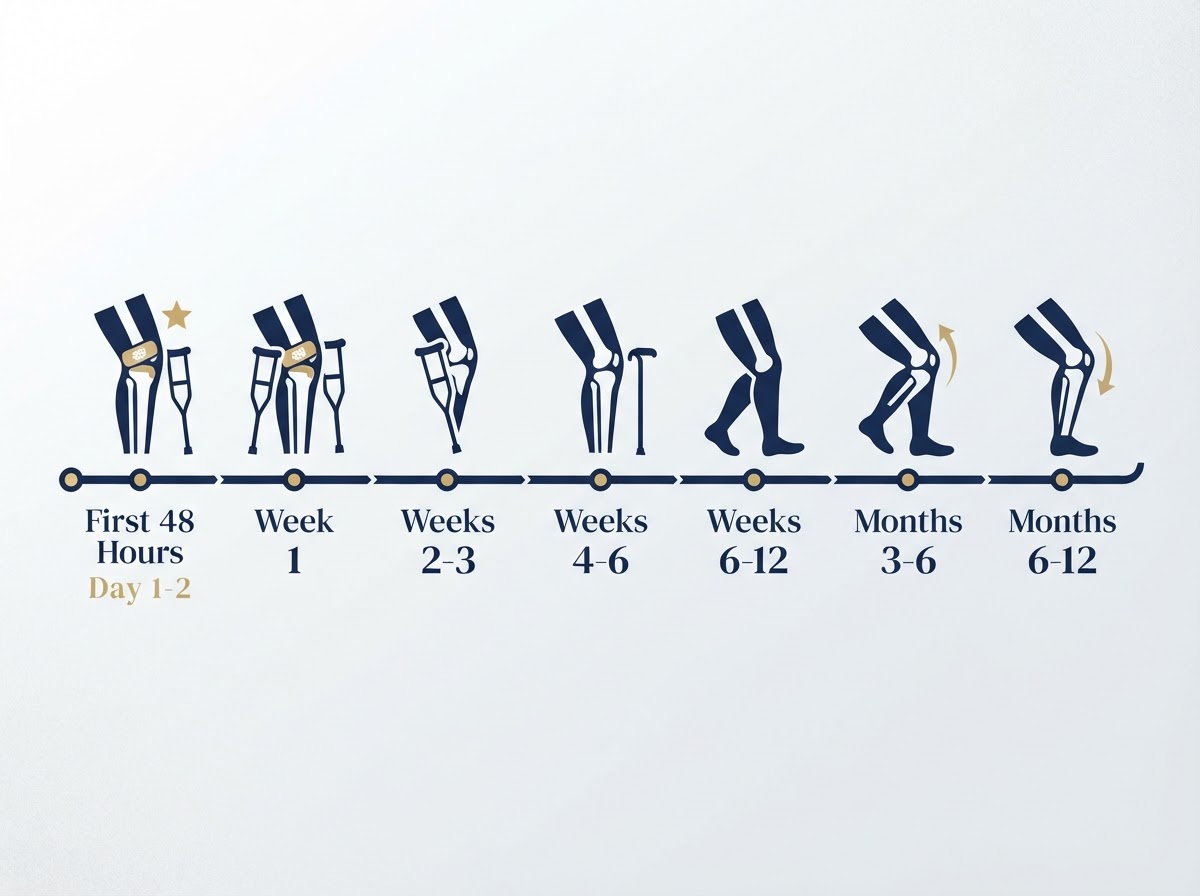
Total hip replacement (total hip arthroplasty) is among the most successful procedures in modern orthopaedic surgery, reliably relieving chronic pain and restoring mobility in advanced hip osteoarthritis. However, recovery is a progressive journey that unfolds over weeks and months rather than a sudden transformation. A frequent question patients ask before surgery is: 'How long will my recovery take?' In clinical practice, there is no single universal timeline. Recovery velocity depends on several interrelated factors: your general health and cardiovascular fitness, muscle strength prior to surgery, body weight and metabolic status, the surgical approach used, soft-tissue management, implant stability, adherence to individualised rehabilitation, and whether any perioperative complications occur. This guide outlines what patients can realistically expect week by week — from early assisted standing within 24 hours through to independent walking, driving, returning to work, and resuming low-impact recreational sports. For international residents and seasonal visitors on the Costa Blanca — in Torrevieja, Alicante, Orihuela Costa, or La Zenia — having clear, evidence-based guidance helps you pace your recovery safely without over-exerting or unnecessarily holding back.
Section 1: Introduction
Total hip replacement is performed to relieve pain, restore joint mechanics, and improve functional independence when conservative treatments for end-stage hip osteoarthritis or hip osteonecrosis no longer suffice. To understand the timeline, it is helpful to distinguish three distinct phases of recovery: (1) Early recovery and safe mobilisation (weeks 1–3), focused on wound healing, pain management, assisted walking, and safe independent transfers; (2) Functional recovery and independence (weeks 4–12), where gait normalises, walking aids are phased out, and daily domestic activities resume; and (3) Long-term muscular adaptation and tissue remodeling (months 3–12), where hip abductor strength, endurance, and confidence return for higher-demand recreational pursuits. While many patients experience a dramatic reduction in arthritic pain within days of surgery, restoring complete muscular control and gait symmetry requires consistent, progressive effort. Universal timelines or fixed calendar deadlines do not apply to every individual.
Section 2: What affects recovery?
Recovery speed and functional capacity vary considerably between individuals undergoing technically similar operations. Key factors influencing your recovery timeline include: (1) Preoperative functional status and muscle strength — patients who enter surgery with better abductor and gluteal muscle tone recover independent walking faster; (2) Duration and severity of preoperative stiffness — severe longstanding contractures take longer to stretch and re-educate; (3) Age, cardiovascular, and metabolic health — conditions like diabetes, anaemia, or renal impairment influence soft-tissue healing and fatigue; (4) Body mass index (BMI) and nutritional status — adequate protein intake supports tissue repair; (5) Surgical approach and soft-tissue preservation — approaches that preserve or repair the posterior capsule and abductors influence early muscle activation and restrictions; (6) Implant stability and bone quality — uncemented versus cemented fixation protocols; (7) Rehabilitation quality and consistency; and (8) Psychological factors such as fear of movement (kinesiophobia).
Section 3: The first 24–48 hours
In modern enhanced recovery protocols (ERAS), recovery begins immediately following surgery. Monitored in the post-anaesthesia care unit, pain control relies on a multimodal, opioid-sparing strategy incorporating local infiltration analgesia (LIA), regional nerve blocks (such as PENG or fascia iliaca blocks), regular paracetamol, non-steroidal anti-inflammatory drugs (NSAIDs), and short-acting rescue opioids if required. Early mobilisation — standing and taking short, assisted steps within 24 hours of surgery — is strongly encouraged when vital signs and motor block resolution permit. Early weight-bearing reduces perioperative complications such as deep vein thrombosis (DVT), pulmonary atelectasis, urinary retention, and muscle deconditioning. Physiotherapy begins at the bedside with basic circulation exercises (ankle pumps), gentle quadriceps and gluteal isometric sets, and instruction on safe bed-to-chair transfers.
Section 4: Week 1: Learning to move again
During the first week at home or in hospital, the primary goals are safe independent mobility, wound protection, and swelling control. Patients walk short distances using a walking frame or two forearm crutches, placing full or partial weight on the operated leg as advised by the surgical team. Essential daily tasks include learning to get in and out of bed smoothly, sitting down and standing up from appropriate-height chairs without sudden twisting, and navigating a few steps or stairs using the 'good leg up, operated leg down' rule. Mild to moderate swelling, bruising extending down the thigh or calf, and a deep, dull ache are expected inflammatory responses. Ice therapy (15–20 minutes at a time), leg elevation when resting, and regular gentle home exercises are performed 3–4 times daily. Rest is just as essential as movement — over-walking in week 1 increases joint effusion and muscle fatigue.
Section 5: Weeks 2–3: Building confidence
By weeks 2 and 3, surgical pain gradually subsides into a manageable ache, and reliance on pain medications decreases. Walking distance outdoors increases, and gait quality improves. Where balance and gluteal control permit, many patients transition from two crutches to a single crutch or walking stick held in the hand opposite the operated hip (the contralateral side) to reduce hip joint reaction forces. Staples or skin sutures are reviewed or removed around day 12–14, provided the wound is completely dry, clean, and well-healed. Gentle physical therapy progresses from bed-based isometric exercises to standing hip abductor control, gentle active range of motion, and balance drills. Patients are reminded that crutches should not be abandoned based on an arbitrary calendar date — walking without aids before gluteal strength is sufficient leads to a persistent compensatory limp (Trendelenburg gait).
Section 6: Weeks 4–6: Functional recovery
Weeks 4 to 6 mark a major transition toward domestic independence. Most patients walk comfortably around the house without aids, reserving a stick for longer outdoor walks or uneven surfaces. Hip range of motion improves, allowing easier dressing and shoe-tying (using long-handled shoehorns or adaptive aids if precautions apply). Exercises advance to functional strengthening: sit-to-stand repetitions, step-ups on low steps, stationary exercise cycling with minimal resistance, and pelvic-stabilisation drills. For many sedentary office workers, a gradual return to remote or light part-time work is feasible during this window. Returning to driving is also evaluated during weeks 4–6 once full weight-bearing, rapid brake reaction time, and complete freedom from sedating medications are established.
Section 7: Weeks 6–12: Progressive strength and independence
Between 6 and 12 weeks, the focus shifts to restoring stamina, muscle volume, and natural gait cadence. Patients gradually increase outdoor walking distances to 30–60 minutes without fatigue. Rehabilitation targets five essential muscle groups: (1) Gluteus medius and minimus for frontal pelvic stability during single-leg stance; (2) Gluteus maximus for hip extension and stair climbing; (3) Iliopsoas and rectus femoris for active hip flexion; (4) Deep lateral rotators for dynamic joint centration; and (5) Core abdominal and spinal stabilisers to prevent compensatory lumbar lordosis. Supervised physiotherapy or structured home exercises are progressed with resistance bands and light weights. Muscle soreness after new exercises is normal, but sharp joint pain or persistent joint swelling signals a need to adjust exercise intensity.
Section 8: Months 3–6: Returning to an active life
Between months 3 and 6, structural bone ingrowth around uncemented implants reaches high mechanical security, and soft-tissue repair around the hip capsule matures. Patients notice that the hip feels increasingly 'natural' during everyday movements. Walking endurance increases significantly, and low-impact recreational activities can be resumed gradually — including flat-ground hiking, swimming (once the surgical scar is fully mature and closed), stationary and outdoor road cycling, doubles tennis, and golf. Strength gains continue, though mild stiffness after prolonged sitting or intense activity may still recur intermittently. Patient expectations should remain realistic: while discomfort is minimal, full muscle hypertrophy and dynamic proprioception continue to develop well beyond the 6-month mark.
Section 9: Months 6–12: Longer-term recovery
The period from 6 to 12 months represents the final phase of functional adaptation. Subtle asymmetries in gait, step length, and single-leg balance typically resolve as the gluteal musculature reaches full strength. While most patients achieve complete pain relief and excellent mobility by 12 months, clinical studies confirm that bone remodeling and muscle endurance gains can continue up to two years post-op. A distinction must be made between a highly satisfactory clinical outcome and complete restoration of adolescent physical flexibility — artificial joint bearings operate within fixed physical constraints, and maintaining core strength and a healthy body weight remains essential for long-term implant longevity.
Section 10: Walking after hip replacement
Walking is the primary functional milestone after total hip replacement. Early walking promotes venous blood flow, prevents capsular stiffness, and restores neural gait pathways. However, quality of movement matters far more than total distance. Patients should focus on an upright posture, equal step lengths, smooth heel-to-toe rolling, and avoiding a compensatory limp. Using a walking aid (crutch or cane) until gluteus medius strength prevents pelvic dropping is critical. Prematurely discarding walking aids forces the body to lean over the operated hip (lurching gait), reinforcing abnormal movement habits that are difficult to correct later. Walking distance should progress gradually — for example, adding 5–10 minutes per week — based on joint comfort rather than rigid distance goals.
Section 11: Physiotherapy and home exercises
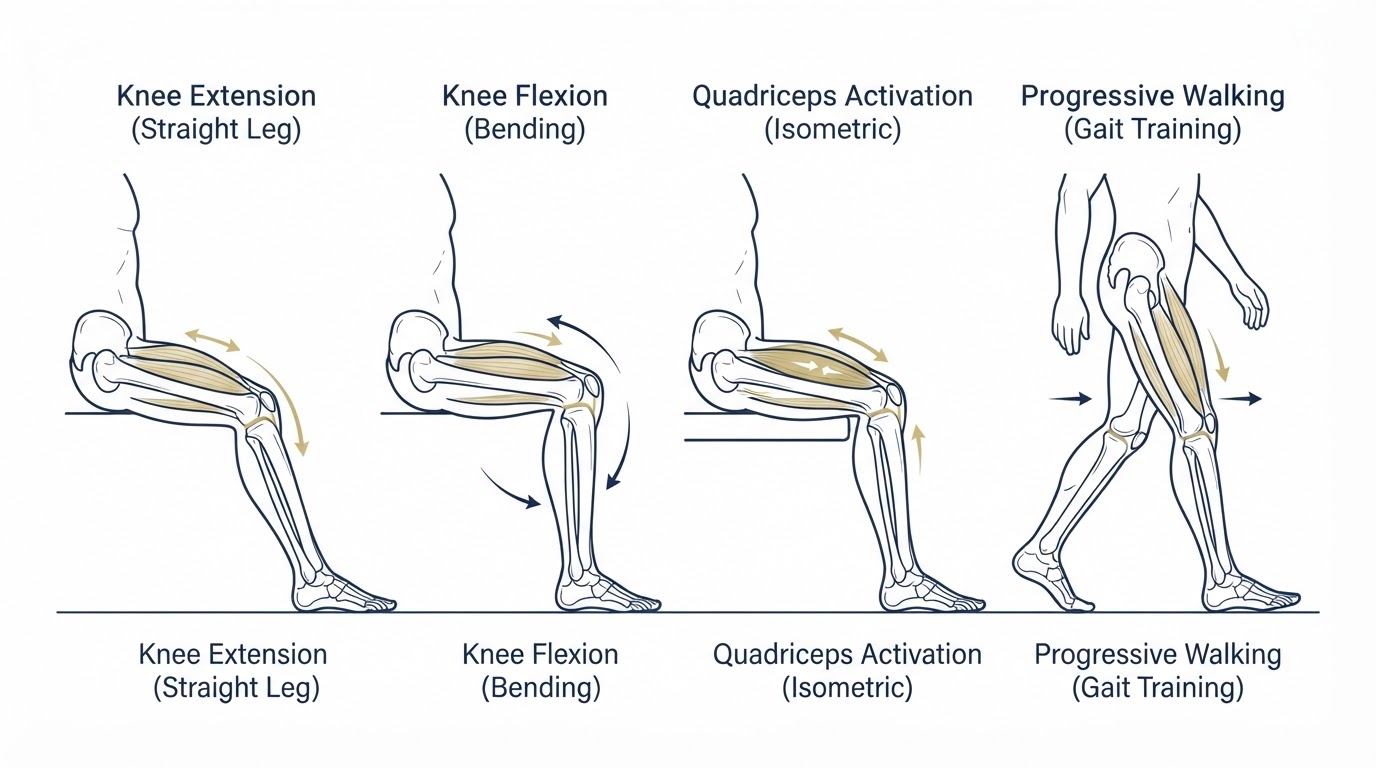
Rehabilitation after hip replacement combines structured physical therapy sessions with a consistent home exercise routine. Exercises are designed to restore mobility, muscle activation, and balance without overloading healing tissues. The table below outlines the core exercise categories: | Exercise Category | Objective | Typical Examples | |---|---|---| | Ankle Pumps & Circles | Venous return & DVT prevention | Active foot flexing & rotation | | Quadriceps & Gluteal Sets | Isometric muscle activation | Bed-based muscle squeezing | | Heel Slides & Hip Flexion | Active knee & hip mobility | Sliding heel toward buttock | | Hip Abductor Strengthening | Pelvic frontal stability | Side-lying or standing leg lifts | | Gluteal Bridges | Hip extension & pelvic control | Lifting pelvis in supine position | | Sit-to-Stand Drills | Functional quadriceps & gluteal strength | Rising from a sturdy chair | | Single-Leg Balance | Proprioception & joint stability | Standing on operated leg near support | All exercises must be performed smoothly within a pain-free range, respecting surgical restrictions.
Section 12: Hip precautions: Do all patients need the same restrictions?
Historically, rigid postoperative 'hip precautions' — such as avoiding hip flexion past 90 degrees, crossing legs, or internal rotation for 6–12 weeks — were prescribed to prevent prosthetic dislocation. Contemporary orthopaedic research demonstrates that routine, strict hip precautions may not be necessary for all patients, particularly when modern capsular and repair techniques, larger femoral head sizes, or muscle-sparing approaches (such as direct anterior or direct superior) are employed. High-level evidence shows that routine restrictions do not decrease dislocation rates in standard low-risk patients but can delay functional return and increase anxiety. However, individualised precautions remain important for patients with specific risk factors: high-risk soft-tissue hypermobility, neuromuscular conditions, complex revision surgery, or specific component positioning. Always strictly follow the specific postoperative instructions provided by your operating surgeon.
Section 13: Returning to work
Timing of return to employment depends primarily on the physical demands of your occupation, travel requirements, and overall fatigue levels. General timelines include: (1) Sedentary or desk work (remote/office) — typically 3 to 6 weeks, provided pain is controlled and sitting posture is comfortable; (2) Light physical work (frequent standing, walking, light lifting under 5 kg) — typically 6 to 9 weeks; (3) Standing occupations (retail, teaching, hospitality) — 8 to 12 weeks, often starting with phased part-time hours; and (4) Heavy physical or manual labour (construction, heavy lifting, climbing ladders) — typically 3 to 6 months, requiring detailed functional capacity evaluation by your surgeon. Phased return-to-work plans with modified duties are strongly recommended where feasible.
Section 14: Driving after hip replacement
Resuming driving requires three essential clinical criteria: (1) Ability to perform an emergency stop with full force and rapid reaction time without hesitation or pain; (2) Complete cessation of all sedating medications, including prescription opioids; and (3) Ability to enter and exit the vehicle safely without violating movement restrictions. Systematic reviews and driving-simulator studies show that emergency brake reaction time (BRT) typically returns to or improves beyond preoperative baseline levels by 4 to 6 weeks following right-sided hip replacement. For left-sided hip replacements in automatic vehicles, driving may resume sooner (2–3 weeks) once safe mobility is achieved. Always consult your surgeon, check your local vehicle licensing regulations, and verify coverage with your motor insurance provider before driving.
Section 15: Returning to sport
Returning to sports and exercise after total hip replacement should be gradual and tailored to implant fixation, bone density, and previous athletic skill. Low-impact sports carry a low risk of implant wear and are strongly encouraged once muscular control is restored: walking, swimming (after wound closure at ~4 weeks), stationary cycling, road cycling on flat terrain, golf, doubles tennis, croquet, and low-impact gym training. Moderate-impact sports — such as singles tennis, hiking on rough terrain, or downhill skiing — require individual clearance from your surgeon, excellent abductor strength, and established bone-implant fixation (typically after 3–6 months). High-impact, contact, or collision sports (running, football, basketball, squash, martial arts) carry increased risks of polyethylene wear, periprosthetic fracture, or dislocation, and are generally discouraged.
Section 16: Pain, swelling and fatigue: What is expected?
Understanding the difference between expected postoperative symptoms and warning signs reduces anxiety and prevents unnecessary hospital visits. Expected recovery phenomena include: (1) Incisional discomfort and deep muscular ache that steadily diminishes over 4–8 weeks; (2) Moderate localized swelling and subcutaneous bruising around the hip, thigh, and occasionally spreading down to the knee or ankle, peaking around days 4–7 and resolving over 3–4 weeks; (3) Mild joint stiffness after sitting or upon waking; and (4) General systemic fatigue, as the body expends energy on tissue healing and red blood cell recovery. Rest, leg elevation, ice application, and adherence to prescribed analgesia manage these expected sensations effectively.
Section 17: Warning signs: When to contact the surgical team
While severe complications following total hip replacement are uncommon, prompt recognition and immediate medical evaluation are critical if they arise. Contact your surgical team immediately or attend emergency services if you experience any of the following warning signs: (1) Signs of surgical site infection — fever above 38°C, spreading redness, warmth, increasing severe pain, or purulent drainage/foul odour from the incision; (2) Deep Vein Thrombosis (DVT) signs — severe, increasing calf or leg swelling, localized calf tenderness, or warmth; (3) Pulmonary Embolism (PE) signs (EMERGENCY — CALL 112 IN SPAIN IMMEDIATELY) — sudden shortness of breath, sharp chest pain when breathing, coughing up blood, or sudden dizziness/fainting; (4) Suspected dislocation — sudden severe pain, inability to bear weight, shortening of the operated leg, or visible deformity with the leg turned inward or outward; or (5) Wound dehiscence — opening of the surgical incision.
Section 18: Why recovery can be slower in some patients
If your recovery appears slower than expected or lags behind peers, it does not necessarily indicate a surgical failure or implant problem. Common reasons for delayed recovery include: severe preoperative gluteal atrophy or longstanding abductor weakness; significant pre-existing lumbar spine pathology (spinal stenosis, disc herniation) causing radicular weakness; severe contralateral hip or knee osteoarthritis causing compensatory gait overload; preoperative anaemia or systemic inflammatory conditions; metabolic or vitamin D deficiencies affecting tissue repair; or psychological anxiety that restricts movement. Identifying these underlying issues allows your physical therapist and orthopaedic surgeon to adjust your rehabilitation protocol, focus on targeted gluteal re-education, or address concurrent medical factors effectively.
Section 19: Does the surgical approach affect recovery?
Surgical approach — whether direct anterior, direct superior, anterolateral, or posterior/posterolateral — describes the anatomic path used to reach the hip joint. While marketing often highlights dramatic differences, clinical registry data and randomized trials show that long-term functional outcomes at 1 to 2 years are equivalent across all major approaches when performed by an experienced surgeon. Differences exist primarily in the early recovery phase (weeks 1–6): anterior and direct superior muscle-sparing approaches may offer slightly less early pain, lower initial dislocation rates, and quicker unassisted walking in the first 2–4 weeks; posterior approaches with meticulous capsular and rotator repair provide excellent exposure, low complication rates, and rapid functional recovery. Ultimately, accurate component positioning, soft-tissue balance, and surgeon expertise matter far more than the skin incision location.
Section 20: How to prepare before surgery to recover better
Preparing your body and home before surgery — known as 'prehabilitation' — significantly accelerates postoperative recovery and reduces complication risks. Recommended preoperative steps include: (1) Preoperative exercise — performing gentle hip abductor, quadriceps, and upper-body strengthening 3–4 weeks prior to surgery improves early post-op mobility; (2) Medical optimisation — managing blood glucose (HbA1c < 7.5%), treating preoperative anaemia, and stopping smoking at least 4 weeks before surgery to enhance wound healing and reduce infection risk; (3) Home modification — removing loose rugs, arranging clear walking paths, installing bathroom grab bars, securing a sturdy chair with arms and elevated seat height, and placing daily items at waist level; and (4) Arranging personal support for shopping, transport, and domestic tasks during the first 1–2 weeks post-discharge.
Section 21: Frequently asked questions
Below are practical answers to common clinical questions regarding recovery after total hip replacement: 1. How long does it take to recover from hip replacement? Early recovery (walking with aids, basic domestic mobility) takes 3–6 weeks. Full functional independence and return to active recreation typically occur between 3 and 6 months, with continued muscle strengthening up to 12 months. 2. When can I walk after hip replacement? Most patients stand and walk short steps with a walker or crutches within 24 hours of surgery under physiotherapist guidance. 3. How long will I need crutches? Most patients use two crutches or a frame for 1–2 weeks, transition to a single crutch for 1–2 weeks, and walk independently without aids by 4–6 weeks. 4. When can I walk without assistance? Unassisted walking usually occurs between weeks 3 and 6, once gluteal strength prevents limping. 5. When can I drive? Emergency brake reaction time returns to baseline at 4–6 weeks for right hip replacements, provided you are off opioids and can perform a emergency stop safely. 6. When can I return to work? Desk jobs: 3–6 weeks. Light physical work: 6–8 weeks. Heavy physical labour: 3–6 months. 7. When can I climb stairs? Stairs are taught before hospital discharge using the rule: 'Good leg up first, operated leg down first.' 8. When can I sleep on my side? Sleeping on the unoperated side with a pillow between knees is usually permitted immediately. Sleeping on the operated side is allowed after 3–4 weeks when comfortable. 9. Do I need physiotherapy? Yes, structured physical therapy accelerates gluteal strengthening, gait normalisation, and range of motion. 10. When can I return to sport? Low-impact sports (swimming, cycling, golf) at 6–12 weeks. High-impact contact sports are generally discouraged. 11. Is swelling normal after hip replacement? Yes, mild-to-moderate leg and thigh swelling is common for 3–4 weeks and improves with leg elevation and ice. 12. How long does postoperative pain last? Surgical pain peaks in the first 48 hours and steadily subsides over 2–4 weeks, transitioning to a mild ache managed with simple painkillers. 13. When should I worry about pain after hip replacement? Sudden, severe, or worsening pain accompanied by fever, wound discharge, or inability to bear weight requires immediate medical review. 14. Can recovery take longer than 6 months? Yes, muscle hypertrophic conditioning and gait symmetry continue improving up to 12–24 months post-op. 15. Does the surgical approach affect recovery? Muscle-sparing approaches may offer slightly faster recovery in the first 2–4 weeks, but 1-year functional outcomes are equal across all approaches.
Summary: A Realistic, Patient-Centred Recovery
Recovery after total hip replacement is a progressive, rewarding process that restores pain-free mobility and quality of life. By understanding the typical milestones — from early standing on day one to returning to active recreation at three to six months — patients can pace their rehabilitation safely and with confidence. Adhering to your surgeon's specific guidelines, participating actively in physiotherapy, and staying alert for warning signs ensures a smooth transition back to an independent, active life on the Costa Blanca.
References & scientific evidence
- Wainwright TW et al.. Consensus statement for perioperative care in total hip replacement and total knee replacement surgery: Enhanced Recovery After Surgery (ERAS®) Society recommendations.. Acta Orthopaedica, 2019.Clinical guidelineDOI: 10.1080/17453674.2019.1683790View source
- National Institute for Health and Care Excellence. Joint replacement (primary): hip, knee and shoulder. NICE guideline NG157.. National Institute for Health and Care Excellence (NICE), 2020.Clinical guidelineView source
- Patel PV, Giannoudis VP, Palma S, Guy SP, Palan J, Pandit H, Van Duren BH. Doctor when can I drive? A systematic review and meta-analysis of return to driving after total hip arthroplasty.. HIP International, 2021.Meta-analysisDOI: 10.1177/1120700021998028View source
- Crompton J, Osagie-Clouard L, Patel A. Do hip precautions after posterior-approach total hip arthroplasty affect dislocation rates? A systematic review of 7 studies with 6,900 patients.. Acta Orthopaedica, 2020.Systematic reviewDOI: 10.1080/17453674.2020.1795598View source
- Arshi A et al.. Sports and Physical Activity Following Total Hip Arthroplasty: Patterns of Participation and Determinants of Return.. The Journal of Arthroplasty, 2021.Observational studyDOI: 10.1016/j.arth.2021.01.045View source
- Husted H, Otte KS, Kristensen BB, Ørsnes T, Kehlet H. Readmissions after fast-track hip and knee arthroplasty.. Acta Orthopaedica, 2010.Observational studyDOI: 10.3109/17453671003787070View source
- Kunutsor SK, Barrett MC, Beswick AD et al.. Risk factors for dislocation after primary total hip replacement: meta-analysis of 125 studies involving approximately five million hip replacements.. The Lancet Rheumatology, 2019.Meta-analysisDOI: 10.1016/S2665-9913(19)30045-1View source
- Gromov K, Troelsen A, Otte KS, Ørsnes T, Ladelund S, Husted H. Removal of restrictions following primary THA with posterolateral approach does not increase the risk of early dislocation.. Acta Orthopaedica, 2015.Observational studyDOI: 10.3109/17453674.2015.1028009View source
- American Academy of Orthopaedic Surgeons. Management of Hip Fractures in Older Adults — Evidence-Based Clinical Practice Guideline.. American Academy of Orthopaedic Surgeons (AAOS), 2021.Clinical guidelineView source
- National Joint Registry for England, Wales, Northern Ireland and the Isle of Man. National Joint Registry 21st Annual Report — Hip and knee arthroplasty outcomes.. National Joint Registry (NJR), 2024.Observational studyView source
Frequently asked questions

Dr. Pablo Banchero Lasalvia
Orthopaedic Surgeon · Traumatology Team
- Author:
- Dr. Pablo Banchero Lasalvia
- Medical reviewer:
- Dr. Pablo Banchero Lasalvia
- Published:
- 4 November 2026
- Medical review date:
- 4 November 2026
- ·
- 20 min read
Book Your Private Consultation with Dr Pablo Banchero
Discuss your symptoms, imaging, and surgical recovery options with Dr Pablo Banchero on the Costa Blanca.
Official number: +34 602 99 22 22