
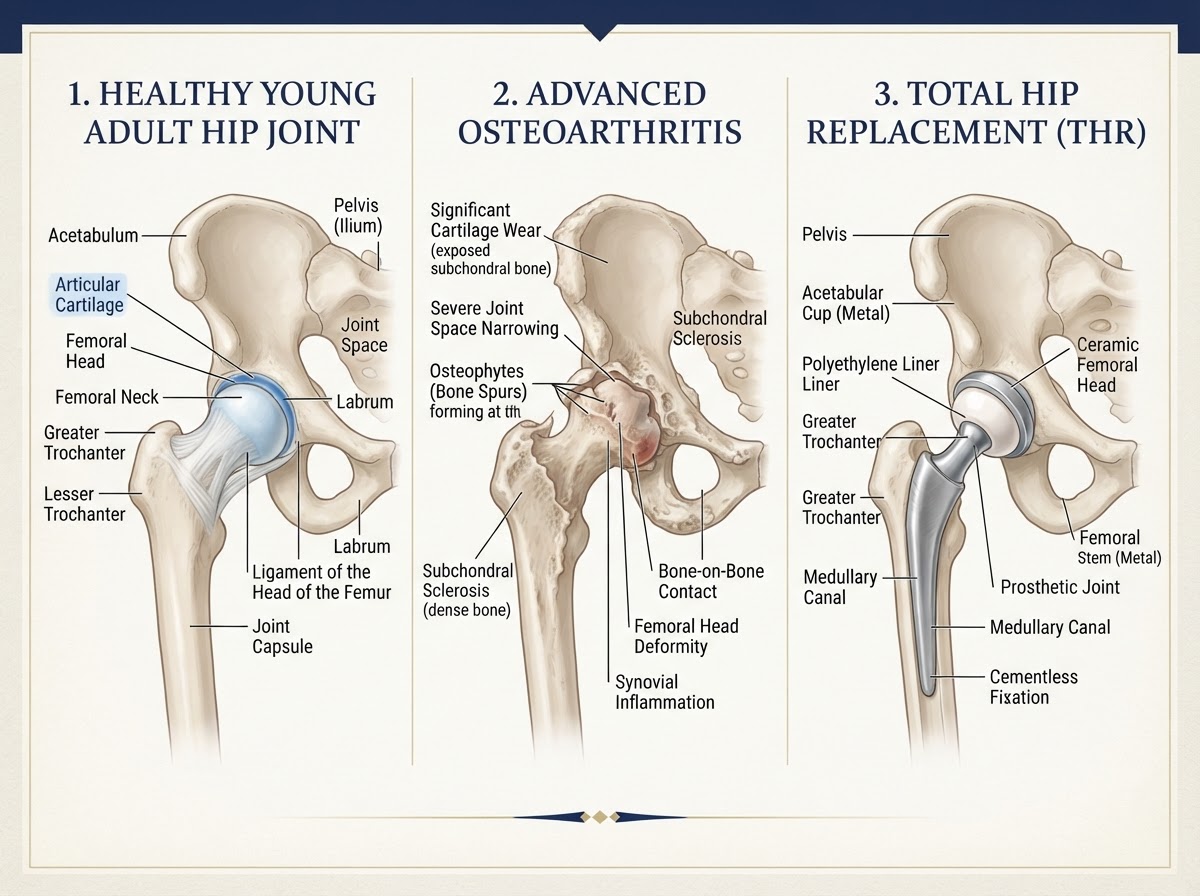
One of the most difficult decisions in hip surgery is whether to perform a total hip replacement in a younger or relatively young patient. The concern is understandable: a prosthesis may need to last many decades, the lifetime probability of eventually requiring a revision is higher than in an older patient, and activity expectations are often demanding. The honest answer is that there is no universal minimum age for a hip replacement, and age alone should never be the only factor in the decision. The right question is not 'am I too young?' but 'is my hip problem severe enough, and am I well enough, for surgery to improve my life — and if so, which implant, fixation, bearing and strategy will best fit the next decades?' This article, written for residents and visitors on the Costa Blanca — Alicante, Torrevieja, Orihuela Costa and La Zenia — explains when hip replacement may be appropriate in a younger patient, what implant longevity actually means, how activity and body weight influence survival, what bearing surfaces and stem designs are available, and how a long-term individualised strategy is built. The message is balanced: early surgery is not automatically good, and indefinite delay is not automatically wise. The decision is individualised.
Am I Too Young for a Hip Replacement?
There is no rigid minimum age below which a hip replacement cannot be performed. The decision is based on clinical and functional criteria, not on a number. The factors that matter are the severity of symptoms, the degree of functional limitation, the extent of joint damage, the response to conservative treatment, bone quality, anatomy and the patient's expectations and quality of life. It helps to distinguish several concepts that are often confused: • Chronological age: the number of years since birth. • Biological age: the overall state of health, fitness, bone quality and physiological reserve. • Functional level: what the patient can actually do — walk distance, climb stairs, work, exercise. • Joint state: the radiographic and structural severity of the disease. • Implant life expectancy: how long the prosthesis may realistically last given the patient's age, activity and biology. A fit 45-year-old with severe symptomatic osteoarthritis that has not responded to conservative treatment may be an excellent candidate. A 75-year-old with mild discomfort and well-preserved function may not need surgery. Age is relevant, but it is one factor among many — never the sole criterion.
Why Do Younger Patients Need Hip Replacement?
Several conditions can lead to advanced hip joint damage at an early or middle age. The most common causes include: • Primary osteoarthritis: degenerative wear that can, in some patients, become symptomatic before the age of 60. • Femoroacetabular impingement (FAI): abnormal contact between the femoral head-neck junction and the acetabular rim that, over years, can damage the labrum and cartilage and progress to arthritis. • Hip dysplasia: a shallow or misaligned acetabulum that overloads the joint and accelerates degeneration. • Osteonecrosis of the femoral head: loss of blood supply that can cause the femoral head to collapse, sometimes in young adults. • Post-traumatic arthritis: arthritis developing after a previous hip fracture or injury. • Inflammatory arthritis: conditions such as rheumatoid or psoriatic arthritis that can damage the hip at a relatively young age. • Previous childhood hip disorders: such as dysplasia, Perthes disease or slipped capital femoral epiphysis, which can lead to arthritis in adulthood. Understanding the cause matters because it influences anatomy, bone quality, the complexity of the reconstruction and the long-term strategy. A patient with dysplasia, for example, may have a distorted acetabulum that requires specific planning; a patient with osteonecrosis may have compromised proximal femoral bone that affects stem choice.
When Is Hip Replacement Appropriate?
The indication for a hip replacement in a younger patient follows the same principles as in any patient, but with added attention to the long-term horizon. Surgery is considered when several factors align: • Persistent pain that limits daily life. • Night or rest pain that disturbs sleep. • Difficulty walking, reduced distance, or reliance on aids. • Limitation at work, in sport or in personal activities. • Loss of quality of life and independence. • Relevant radiographic changes of advanced joint damage. • Conservative treatments that have failed, are unsuitable, or are no longer providing adequate relief. A key point: the X-ray alone does not determine the need for surgery. The correlation between radiographic appearance and symptoms is imperfect. Some patients with severe imaging changes manage well; others with moderate changes have disabling pain. The decision integrates symptoms, function, imaging and shared decision-making — never an X-ray grade alone.
Should You Delay Surgery as Long as Possible?
This is one of the most common and important questions. The idea that one should always wait 'as long as possible' is an oversimplification, but so is the opposite — that surgery should be rushed. The honest position is that the optimal timing depends on the individual. Possible advantages of waiting: • Avoiding or postponing an operation that is not yet clearly necessary. • Preserving the native joint while it remains functional. • Continuing with conservative treatment when it still provides acceptable results. • Allowing the patient time to weigh the decision. Possible disadvantages of waiting too long: • Persistent pain and disturbed sleep. • Progressive loss of mobility and range of motion. • Muscle deconditioning and gait changes that can complicate recovery. • Limitations at work and in personal life. • Deterioration of quality of life. • In some cases, worsening bone quality or joint state that makes later surgery more complex. Waiting does not necessarily worsen the surgical result, and delaying is reasonable when conservative care is working. But when symptoms and function are clearly declining and reasonable treatment is no longer helping, postponing an indicated operation indefinitely is not a neutral choice. The optimal moment is when the benefit of recovering function clearly outweighs the risks of surgery and the burden of continued suffering.
Hip Replacement Before Age 40, 50 or 60
It is useful to think in broad age bands, but these are not rigid clinical categories — they are reference points. Each patient is assessed individually. • Under 40: hip replacement is uncommon but not impossible. It is usually reserved for severe symptomatic disease where joint-preserving options are no longer appropriate. The main concern is the very long horizon and the higher lifetime probability of revision. • 40–49: a group where the decision is frequent and delicate. Many patients in this band have end-stage disease from FAI, dysplasia or osteonecrosis. Modern implants provide reassurance, but a long-term strategy is essential. • 50–59: the largest group of 'younger' arthroplasty patients. The balance between symptom relief and implant longevity is central. • 60–65: often considered the conventional window for hip replacement, with a more favourable balance of benefit, risk and implant survival. Registry evidence consistently shows that younger age at primary surgery is associated with a higher cumulative probability of revision over a lifetime. This does not mean a young patient should be denied surgery when it is indicated — it means the decision, the implant and the activity strategy should account for that horizon. The figures should be discussed honestly, not presented as a guarantee or a prohibition.
What Does Implant Longevity Mean for a Younger Patient?
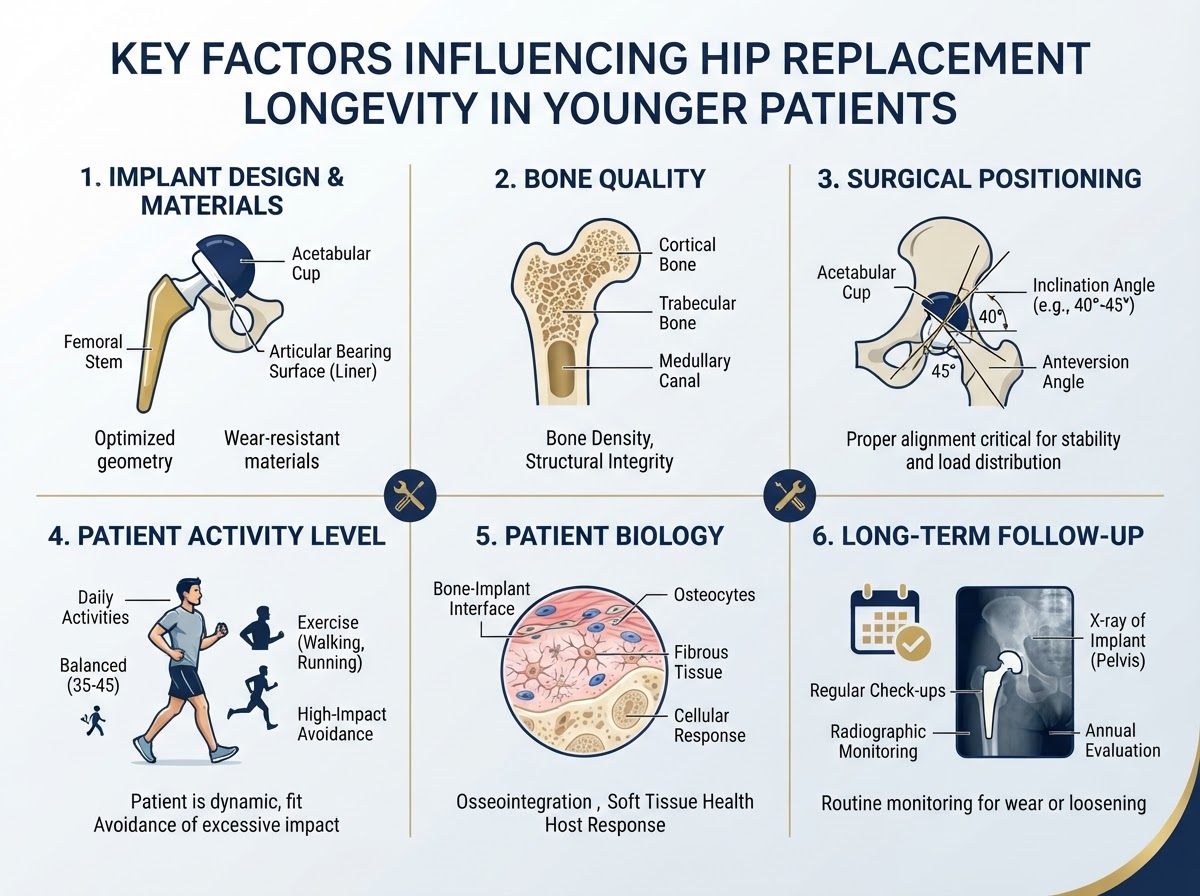
Implant longevity is often reduced to a single number — 'a hip replacement lasts 15 or 20 years' — but the reality is more nuanced. Several concepts matter: • Implant survival: the proportion of implants still in place at a given time without revision. • Revision-free survival: the same, expressed as the probability of not needing another operation. • Lifetime revision risk: the cumulative probability that a given patient will need at least one revision over their remaining life, accounting for age, sex, diagnosis, implant and activity. • Competing mortality risk: the probability that a patient will die from other causes before the implant needs revision. • Functional outcome: how well the joint works for the patient — pain, mobility, satisfaction — which is related to but not identical to implant survival. For an 80-year-old, a 15-year survival figure may cover most of the remaining lifespan. For a 45-year-old, that same figure covers only part of the horizon, so the lifetime revision probability is higher and the choice of implant, fixation, bearing and activity strategy becomes more relevant. National registry data (NJR, AOANJRR, Swedish, Norwegian and AJRR) provide large, high-quality survival estimates. Long-term studies show that the large majority of modern total hip replacements survive well beyond 10–15 years, with substantial cohorts still functioning at 20 years and beyond. These figures are population averages, however, and should not be extrapolated automatically to a single younger patient. Your surgeon can give a realistic picture for your situation.
Will I Need Another Hip Replacement?
A future revision is possible, but it is not inevitable. The probability of revision depends on: • The reason the primary implant was placed (diagnosis, joint state, anatomy). • The type of implant, fixation and bearing surface. • Bone quality and the extent of any future bone loss. • Wear and the body's response to wear particles. • Infection risk. • Dislocation events. • Periprosthetic fracture. • Activity and body weight over the decades. • Surgical technique and component positioning. Registry data show that younger patients have a higher lifetime probability of revision than older patients, partly because they live longer with the implant and accumulate more loading cycles. But many younger patients never need a revision. Presenting a single number without considering age, sex, implant design, diagnosis and the registry from which it comes would be misleading. The honest message is that revision is a possibility to plan for, not a certainty to expect — and that choices made at the primary operation (implant, fixation, bearing, technique) influence that probability.
Implant Selection in Younger Patients
A total hip replacement has four main components: the acetabular cup (fixed into the pelvis), the liner (the bearing surface inside the cup), the femoral head (the ball that articulates inside the liner) and the femoral stem (inserted into the femur and carrying the head). In a younger patient, each choice is made with the long horizon in mind. The factors that influence selection include: • Femoral and acetabular anatomy. • Bone quality and canal shape. • Activity level and expectations. • Life expectancy and competing health risks. • Dislocation risk. • Implant design and generation — modern highly cross-linked polyethylene and ceramics have substantially improved wear performance over earlier generations. • Compatibility between head, liner and stem (modular interfaces). No commercial brand is promoted here. The right implant is the one that fits the patient's anatomy, biology and activity — selected through surgical judgement, not marketing. This is discussed in more detail in our dedicated article on implant selection, fixation, bearing surfaces and longevity.
Cemented vs Cementless Fixation
Fixation is how the implant is secured to bone. Two main strategies exist, and a third (hybrid) combines them. • Cementless fixation: the component is pressed into prepared bone and designed for bone to grow onto a specially prepared porous surface, giving secondary biological fixation. It relies on adequate bone quality for initial mechanical stability and later osseointegration. There is a risk of intraoperative or postoperative periprosthetic fracture, particularly with osteoporotic bone, and it may not be ideal when bone quality is poor. • Cemented fixation: bone cement (typically polymethylmethacrylate, PMMA) is used to fix the component, providing immediate mechanical stability. It can be appropriate in patients with reduced bone quality. Specific risks include, in susceptible patients, bone cement implantation syndrome. • Hybrid fixation: one component cemented (often the stem) and the other cementless (often the cup); reverse hybrid is the opposite. CEMENTED VS CEMENTLESS FIXATION: • Primary stability: Cemented = immediate; Cementless = mechanical press-fit initially. • Secondary fixation: Cemented = cement interlock; Cementless = osseointegration onto the surface. • Bone quality need: Cemented = tolerates poorer bone; Cementless = requires adequate bone. • Periprosthetic fracture risk: Cementless = higher in osteoporotic bone; Cemented = lower. • Cement-related risk: Cemented = bone cement implantation syndrome in susceptible patients. • Long-term registry evidence: Both = strong, varies by stem and cup design. In many younger patients with good bone quality, cementless fixation is commonly used, but it is not universally superior. The choice depends on bone quality, anatomy, age, activity and surgical judgement — not on a one-size-fits-all rule.
Bearing Surfaces: Ceramic and Highly Cross-Linked Polyethylene
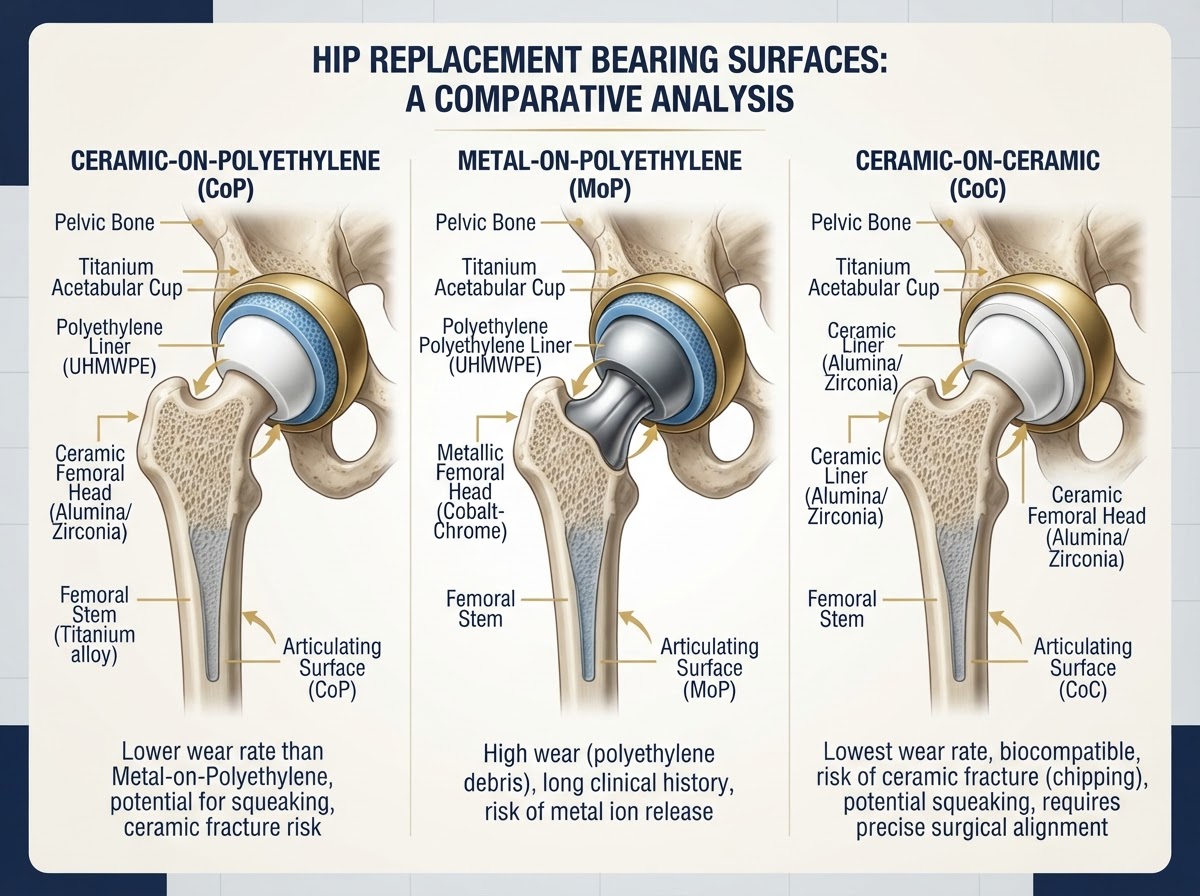
The bearing surface is where the femoral head articulates inside the liner. In a younger patient, wear over decades is the central concern, because wear particles can provoke osteolysis and contribute to aseptic loosening. The main combinations are: 1. Ceramic-on-highly-cross-linked polyethylene: a ceramic head articulating against a modern highly cross-linked polyethylene liner. Low wear, biocompatible particles; the ceramic head is hard and scratch-resistant. 2. Metal-on-highly-cross-linked polyethylene: a cobalt-chromium head against highly cross-linked polyethylene. Well established and durable; metal heads are tough and less prone to fracture than ceramic. 3. Ceramic-on-ceramic: a ceramic head against a ceramic liner. Very low wear and biocompatible; potential concerns include a small risk of ceramic fracture and audible noise (squeaking) in some patients. 4. Metal-on-metal: largely historical; largely abandoned for primary hip replacement because of adverse local tissue reactions and elevated metal ion levels (see below). BEARING SURFACES COMPARISON: • Wear: Ceramic-on-ceramic = lowest; Ceramic-on-HXLPE = very low; Metal-on-HXLPE = low. • Osteolysis risk: Reduced substantially with HXLPE compared with older conventional polyethylene. • Ceramic fracture: Rare but possible; more relevant in small-diameter heads. • Noise: Mainly a ceramic-on-ceramic phenomenon in some patients. • Modularity: Additional head/liner interfaces must be compatible. Highly cross-linked polyethylene has substantially reduced wear compared with the conventional polyethylene of earlier generations, and this is one of the most important material advances for younger patients. But reduced wear measured in the laboratory is not automatically equivalent to greater survival demonstrated in every patient — it is one contributing factor among several. No bearing is universally superior; the choice is individualised.
Does a Younger Patient Need a Ceramic Head?
Ceramic and metal femoral heads each have characteristics that matter in a younger patient. • Ceramic heads: extremely hard, scratch-resistant and hydrophilic, producing very low wear against highly cross-linked polyethylene and against ceramic liners. They are biocompatible and generate few biologically active particles. Their main limitation is a small risk of fracture — rare with modern ceramics — and the need for a compatible taper and liner. • Cobalt-chromium heads: tough and well established, with a long track record and very low fracture risk. Against highly cross-linked polyethylene they perform well. Their limitation is the potential for corrosion at the modular interface (trunnionosis) and the generation of metal debris in some patients. There is no absolute answer that ceramic is obligatory for a younger patient, nor that metal is inferior. The choice depends on the liner, the taper compatibility, the manufacturer's system, the head diameter and the surgeon's assessment. What matters is that the head and liner are selected as a matched pair within a compatible, well-proven system.
Short Stems vs Standard Femoral Stems
Femoral stem design varies, and 'short stem' has become a popular concept in younger patients, but the evidence must be understood honestly. • Short stems: designed to preserve proximal femoral bone and load the metaphysis more physiologically, with a shorter implant. Theoretical advantages include bone preservation and easier potential revision. Long-term evidence is growing but is less mature than for conventional stems. • Standard or conventional stems: well-proven designs with decades of registry evidence and reliable fixation, but they occupy more of the femoral canal. • Straight vs anatomical stems: differ in geometry and load distribution. • Cemented polished tapered stems vs cementless tapered or wedge stems: fixation principles differ (see the cemented vs cementless section). SHORT STEMS VS STANDARD STEMS: • Bone preservation: Short = theoretical advantage; Standard = well established. • Initial fixation: Both = reliable with appropriate surgical technique. • Stress distribution: Short = more proximal loading; Standard = more diaphyseal. • Long-term evidence: Standard = extensive; Short = growing but less mature. • Revision ease: Short = theoretical advantage if revision needed; not proven in all designs. Short stems do not guarantee an easier revision or a longer-lasting implant — those are theoretical advantages, not universal outcomes. The decision is individualised and based on anatomy, bone quality, activity and the maturity of the evidence for a given design.
Hip Replacement and Sports
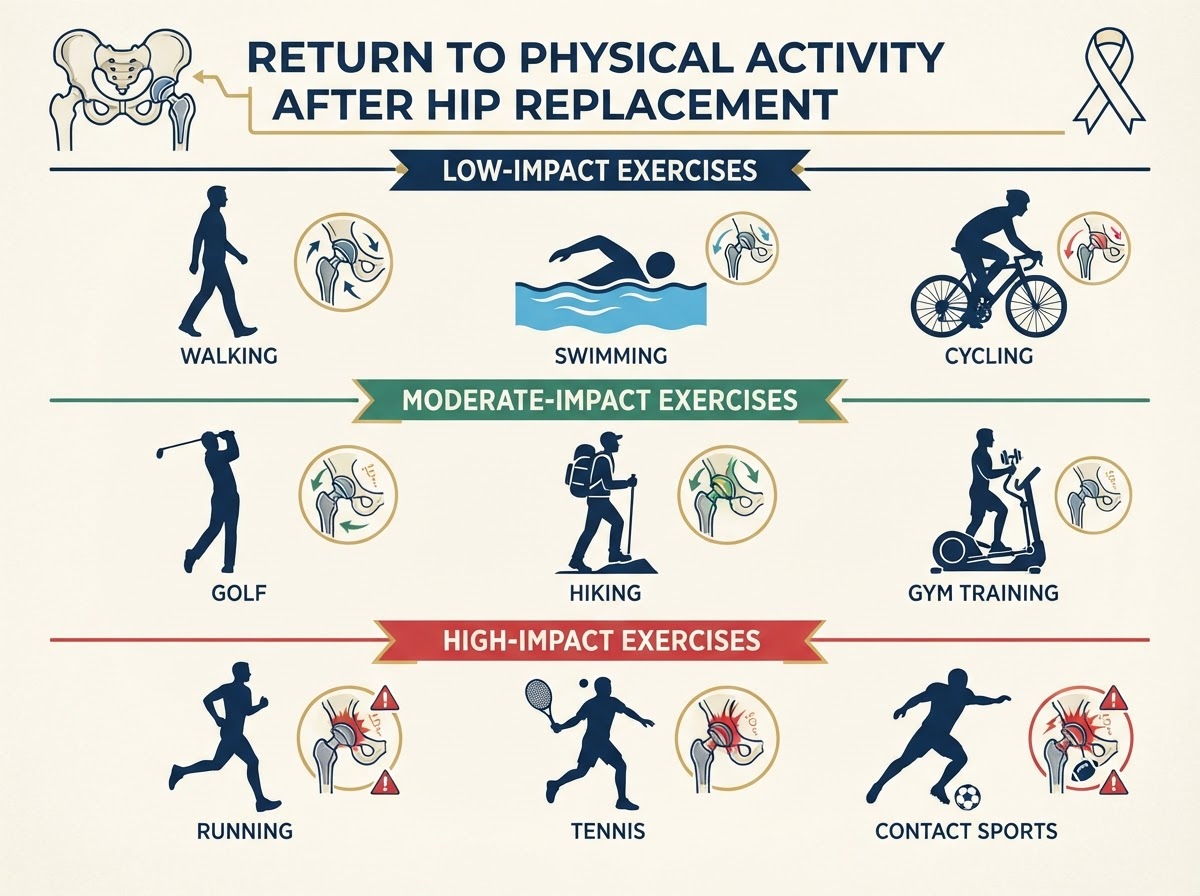
Many younger patients want to return to sport after a hip replacement. Activity guidance is individualised, not a blanket rule. A useful classification separates activities by impact level: • Low-impact: walking, swimming, cycling, gym-based low-impact training. Generally encouraged and compatible with long-term implant function. • Moderate-impact: golf, hiking, gym training, doubles tennis, dancing, skiing with caution. Often possible; discussed individually with attention to experience, fitness and risk. • High-impact: running, singles tennis, contact sports, jumping sports. The area of greatest uncertainty, because repetitive high loading may accelerate wear and increase the risk of periprosthetic fracture or dislocation. LOW-IMPACT VS HIGH-IMPACT SPORTS: • Walking / swimming / cycling: generally encouraged. • Golf / hiking / gym: often possible, individualised. • Running / singles tennis: greatest uncertainty, discuss with surgeon. • Contact sports / jumping: higher risk, generally discouraged. There is no universal prohibition, but there is also no universal permission. The guidance depends on the implant, the bearing, the surgical approach, the patient's preoperative level, the recovery and the surgeon's assessment. The aim is to support a healthy, active life while protecting the investment of the reconstruction.
Does Physical Activity Wear Out a Hip Replacement?
The relationship between activity and implant wear is real but often oversimplified. Wear is driven by: • The number of loading cycles — how many times the joint is loaded. • The intensity and impact of each cycle. • Body weight, which scales the load per cycle. • The bearing surface and its wear properties. • Material fatigue under high repetitive load. • The condition and balance of the muscles around the hip. A healthy level of low-impact activity is generally beneficial for cardiovascular health, muscle tone, weight control and quality of life — and is not equivalent to destructive loading. The concern is with repetitive high-impact loading: thousands of running strides or high-intensity jumps impose cycles and loads that, over years, may accelerate polyethylene wear and increase the risk of complications. The simplistic claim that 'any sport wears out a hip replacement' is not accurate; equally, the claim that 'a modern hip replacement allows unlimited high-impact sport' is not supported. The balanced position is to favour low-impact activity, consider moderate-impact sport individually, and approach high-impact activity with caution and an honest discussion of the trade-offs.
Can You Return to Work After Hip Replacement?
Returning to work depends on the nature of the job, the recovery and the surgeon's guidance. • Sedentary work: often resumed within a few weeks. • Physical work: requires progressive recovery and may need several weeks to months. • Heavy manual work: the area of greatest caution, because repetitive heavy loading may accelerate wear and increase the risk of complications. • Driving: usually resumed once off walking aids, pain is controlled and reaction time is restored; the surgeon confirms timing. • Prolonged standing: may be tiring initially and improves with conditioning. The timeline is individual. Rather than universal dates, the surgeon assesses recovery, the occupational demands and the implant to guide a safe and realistic return.
Weight, Muscle Strength and Implant Longevity
Body weight and muscle condition influence both function and the loads placed on the implant. • Higher body mass increases the load per cycle on the bearing surface and may accelerate wear. • Obesity is also associated with a higher risk of some complications, including infection and dislocation, in registry data. • Muscle strength — particularly the abductor mechanism — supports stability and gait and protects the joint. • Physical conditioning, metabolic health and body composition all contribute to recovery and long-term function. The message is not to blame the patient. Improving physical condition, muscle strength and metabolic health can favour recovery and function, although it does not by itself guarantee greater implant survival. A constructive, individualised conversation about weight and conditioning is part of preparing a younger patient for surgery — not a judgement, but a practical step toward a better long-term outcome.
Hip Dysplasia and Previous Hip Surgery
Some younger patients come to hip replacement with a complex anatomical history that influences planning: • Developmental dysplasia of the hip: a shallow or misaligned acetabulum that may require specific cup placement, possibly with augmentation, and careful attention to coverage and bone stock. • Previous pelvic or femoral osteotomy: altered anatomy and bone that must be accounted for in imaging and templating. • Childhood hip disorders: such as Perthes disease or slipped capital femoral epiphysis, which can leave a distorted femoral head-neck junction and canal. • Previous arthroscopy: may have modified the capsule and labrum and, in some cases, accelerated arthritis. • Previous fracture fixation: hardware, malalignment or non-union that affects exposure and stem choice. These situations do not preclude a successful hip replacement, but they make preoperative planning more complex. Templating, assessment of bone stock, and sometimes additional imaging are needed to choose the right implant, fixation and approach.
Osteonecrosis in Younger Patients
Osteonecrosis (avascular necrosis) of the femoral head is a condition that can affect young adults and is a common reason for early hip replacement. It involves loss of blood supply to the femoral head, which can progress to subchondral collapse and arthritis. • Early stages: may be asymptomatic; sometimes managed with conservative care, medication or joint-preserving procedures when the head has not yet collapsed. • Advanced stages: once the femoral head has collapsed, joint-preserving options have a poor prognosis and total hip replacement becomes the more reliable solution. • The cause matters: some cases are idiopathic; others are associated with corticosteroid use, alcohol, or conditions such as sickle cell disease, lupus or decompression illness. The treatment is linked to the stage and the structural damage. In early disease without collapse, preservation may be considered; in advanced disease with collapse and symptoms, hip replacement is appropriate. As with any younger patient, the long-term strategy and implant choice are part of the discussion.
Hip Replacement and Bone Preservation
Bone preservation is a concept often raised with younger patients: the idea that the reconstruction should leave as much healthy bone as possible to facilitate any future revision. It is a reasonable principle, but it must be understood honestly. • Implant design and stem choice influence how much femoral bone is removed and how loads are distributed. • Bone stock at the time of primary surgery is the foundation for both the current reconstruction and any future one. • Primary fixation must be reliable — bone preservation cannot come at the cost of unstable fixation. • Theoretical preservation is not automatically a proven clinical benefit; the maturity of the evidence for a given design matters. The honest position is that bone preservation is a sensible consideration when it does not compromise fixation, stability or reconstruction quality. It is not a guarantee of an easier future revision, and it should not drive the implant choice in a way that sacrifices proven outcomes for a theoretical advantage.
The Importance of Surgical Approach and Biomechanics
The surgical approach and the biomechanical reconstruction are related to — but distinct from — implant choice. In this clinical programme, the principal approaches are the direct superior approach and the anterolateral approach. • Direct superior approach: usually performed in lateral decubitus; designed to be muscle-sparing with a limited exposure; has a learning curve and suits selected patients. • Anterolateral approach: may be performed in lateral decubitus or supine depending on the variant; a well-established approach that respects the abductor mechanism as far as possible. What matters biomechanically is the restoration of: • Femoral and acetabular version. • Offset (the distance the hip centre sits from the body's midline). • Leg length. • Soft-tissue tension and stability. • Cup inclination and combined anteversion within a stable range. No single approach guarantees a longer-lasting implant. A well-executed operation through any appropriate approach, with well-placed components and restored biomechanics, can achieve excellent long-term results. The direct anterior approach is not the focus of this programme. The choice of approach depends on the surgeon's experience, the patient's anatomy and individual factors.
Robotic and Computer-Assisted Planning
Technology increasingly supports hip replacement planning and execution. The main modalities are: • Computer-assisted navigation: intraoperative guidance of component positioning without a robotic arm. • Robotic-assisted surgery: a robotic system that assists with bone preparation and component placement, often within a planned envelope. • CT-based planning: preoperative planning from a CT scan for personalised component sizing and position. • Imageless planning: planning based on intraoperative landmarks without a CT. • Functional planning: incorporating leg length, offset and soft-tissue balance into the plan. Robotics and navigation can improve the reproducibility and precision of component positioning, which is genuinely useful, particularly for a younger patient where small deviations may matter over decades. But precision is not the same as proven clinical superiority. The current evidence does not establish that robotic hip replacement lasts longer or produces better long-term function than a well-planned, well-executed conventional operation in every patient. The benefit depends on the system, the technique, the surgeon's experience and the patient's profile. Robotics is a tool, not a guarantee.
Preparing a Younger Patient for Surgery
Optimising a younger patient before surgery can improve recovery and reduce risk. Measures that may be considered include: • Muscle conditioning and physiotherapy before surgery to support recovery. • Nutritional status and addressing deficiencies. • Smoking cessation, where applicable, to reduce infection and wound-healing risk. • Diabetes management and glycaemic control when relevant. • Anaemia assessment and treatment if present. • Medication review, including anticoagulants and supplements. • Medical optimisation of cardiovascular, respiratory and metabolic conditions. This is not a universal protocol applied identically to everyone; it is an individualised plan based on the patient's health, the planned procedure and the surgeon's and physician's assessment. The aim is to arrive at surgery in the best possible condition.
Long-Term Follow-Up
After a hip replacement in a younger patient, long-term follow-up is part of the strategy. Follow-up may include: • Clinical review of pain and function. • Radiographs to assess component position and detect changes over time. • Wear assessment when the bearing surface is relevant. • Detection of osteolysis, radiolucent lines or migration that may suggest loosening. • Reassessment of any new symptoms. The frequency of follow-up should be individualised rather than fixed universally; it depends on the implant, the patient, the activity level and the surgeon's protocol. The aim of follow-up is to detect any developing problem early — such as progressive osteolysis that is still silent — so that intervention, if needed, can be planned rather than emergent.
Final Clinical Perspective
A hip replacement in a younger patient should not be decided by age alone, nor by a reflex to delay or to operate. The right decision balances the benefit of recovering mobility and quality of life against the risks of surgery and the implant's long-term needs. The selection of component, fixation, bearing surface, stem design, biomechanics and surgical technique should form a coherent, individualised strategy — not a collection of fashionable choices. The goal is not simply to place a prosthesis, but to choose the right reconstruction for the patient and their functional horizon over the coming decades. On the Costa Blanca — Alicante, Torrevieja, Orihuela Costa and La Zenia — Dr Pablo Banchero offers an individualised, evidence-based assessment and an honest second opinion on whether and when a hip replacement may be appropriate, and which long-term strategy best fits your situation.
An individualised, long-term strategy
There is no universal minimum age for a hip replacement. The decision is based on symptoms, function, joint damage, bone quality, response to conservative treatment and expectations — not on age alone. Implant longevity is not a single number but the result of implant design, fixation, bearing surface, surgical positioning, activity, biology and follow-up, and a younger patient's longer horizon makes each factor more relevant. No material, fixation method or surgical approach is universally superior. The right decision is an individualised long-term strategy, discussed openly between surgeon and patient. On the Costa Blanca — Alicante, Torrevieja, Orihuela Costa and La Zenia — Dr Pablo Banchero provides evidence-based assessment and second opinions to help you decide whether, when and how a hip replacement fits your life.
References & scientific evidence
- Bayliss LE, Culliford D, Monk AP, et al.. The effect of patient age at intervention on risk of implant revision after total hip or knee replacement: population-based cohort study.. The Lancet, 2017.Observational studyDOI: 10.1016/S0140-6736(17)30060-4View source
- National Joint Registry (NJR) for England, Wales, Northern Ireland and the Isle of Man. National Joint Registry 21st Annual Report — Hip, Knee, Ankle, Elbow and Shoulder Arthroplasty: Outcomes and Survivorship.. National Joint Registry, 2024.Observational studyView source
- Australian Orthopaedic Association National Joint Replacement Registry (AOANJRR). Hip, Knee & Shoulder Arthroplasty: Annual Report.. AOA NJRR, 2024.Observational studyView source
- Swedish Hip Arthroplasty Register (SHAR). Swedish Hip Arthroplasty Register Annual Report.. SHAR, 2024.Observational studyView source
- Norwegian Arthroplasty Register (NAR). Norwegian Arthroplasty Register — Hip Annual Report.. Norwegian Arthroplasty Register, 2024.Observational studyView source
- American Joint Replacement Registry (AJRR). American Joint Replacement Registry Annual Report.. AJRR, 2024.Observational studyView source
- Evans JT, Evans JP, Walker RW, Blom AW, Whitehouse MR, Sayers A.. How long does a hip replacement last? A systematic review and meta-analysis of case series and national registry reports.. The Lancet, 2019.Meta-analysisDOI: 10.1016/S0140-6736(18)31665-9View source
- National Institute for Health and Care Excellence (NICE). Joint replacement (primary): hip, knee and shoulder. NICE guideline NG157.. NICE Clinical Guidelines, 2020.Clinical guidelineView source
- National Institute for Health and Care Excellence (NICE). Osteoarthritis in over 16s: diagnosis and management. NICE guideline NG226.. NICE Clinical Guidelines, 2022.Clinical guidelineView source
- American Academy of Orthopaedic Surgeons (AAOS). Management of Osteoarthritis of the Hip — Evidence-Based Clinical Practice Guideline.. AAOS Clinical Practice Guidelines, 2023.Clinical guidelineView source
- American College of Rheumatology (ACR) / American Association of Hip and Knee Surgeons (AAHKS). Optimal Timing of Elective Hip or Knee Arthroplasty — Guideline.. Arthritis Care & Research / Journal of Arthroplasty, 2024.Clinical guidelineView source
- Tsikandylakis I, Mohaddes M, Cnudde P, Eskelinen A, Kärrholm J, Rolfson O.. Cementless compared with cemented total hip arthroplasty: an analysis of 134,651 patients from the Swedish Hip Arthroplasty Register.. Journal of Bone and Joint Surgery (Am), 2018.Observational studyDOI: 10.2106/JBJS.17.00934View source
- Gauden EB, Lanting BA, Howard JL, et al.. An evidence-based review of the use of highly cross-linked polyethylene in total hip arthroplasty.. Journal of Arthroplasty, 2024.Systematic reviewDOI: 10.1016/j.arth.2024.05.062View source
- Hamilton WG, Sadr AD, Ismaily SK, et al.. Long-term results of ceramic-on-polyethylene bearings in primary total hip arthroplasty.. Journal of Arthroplasty, 2023.Observational studyDOI: 10.1016/j.arth.2023.08.041View source
- Lee YK, Ha YC, Yoon BH, Koo KH.. Incidence and risk factors of ceramic head fracture after total hip arthroplasty.. Journal of Arthroplasty, 2017.Observational studyDOI: 10.1016/j.arth.2017.03.030View source
- Grimberg A, Jansson V, Lüring C, et al.. 10-year results of the largest European short-stem total hip arthroplasty registry study.. Archives of Orthopaedic and Trauma Surgery, 2023.Observational studyDOI: 10.1007/s00402-022-04699-9View source
- Schwarzkopf R, Kerbel YE, Remington N, et al.. Short-stem total hip arthroplasty: a systematic review and meta-analysis of mid- to long-term outcomes.. Journal of Arthroplasty, 2024.Meta-analysisDOI: 10.1016/j.arth.2024.03.031View source
- Klemt C, Tirumala V, Xiong A, et al.. Return to sport and physical activity following total hip arthroplasty: a systematic review and meta-analysis.. Journal of Arthroplasty, 2023.Meta-analysisDOI: 10.1016/j.arth.2023.06.043View source
- Magnussen RA, Hebert Fleeson Lillemose L, Beyer N, et al.. Does high-impact activity after total hip arthroplasty increase wear and revision risk? A systematic review.. Journal of Arthroplasty, 2024.Systematic reviewDOI: 10.1016/j.arth.2024.07.008View source
- Vassilyadi M, Springer BD, Ghalia M, et al.. Effect of obesity on implant survivorship and complications following total hip arthroplasty.. Journal of Arthroplasty, 2023.Observational studyDOI: 10.1016/j.arth.2023.03.061View source
Frequently asked questions

Dr. Pablo Banchero Lasalvia
Orthopaedic Surgeon · Traumatology Team
- Author:
- Dr. Pablo Banchero Lasalvia
- Medical reviewer:
- Dr. Pablo Banchero Lasalvia
- Published:
- 2 November 2026
- Medical review date:
- 2 November 2026
- ·
- 25 min read
Discuss the Timing, Implant Options and Long-Term Strategy via WhatsApp
Request a private orthopaedic consultation with Dr Pablo Banchero to discuss whether and when hip replacement may be appropriate, the implant options, and a long-term individualised strategy for your situation.
Official number: +34 602 99 22 22