
If you are considering total hip replacement, you may wonder how artificial hip components are chosen, what materials are used, how they are fixed to bone, and how long they really last. Modern orthopaedic surgery offers several implant designs, fixation methods, and bearing materials. The honest clinical reality is that no single implant combination is universally superior for every patient. Longevity and functional success depend on combining individual anatomy, bone quality, activity expectations, precise surgical technique, and appropriate component selection. This comprehensive reference article explains the science of hip replacement implants in clear detail — based on long-term data from national joint registries and high-level clinical evidence — to help you understand your options and make informed decisions with your surgeon.
Introduction: Not All Hip Replacements Are the Same
A total hip replacement (total hip arthroplasty) is designed to replace damaged or worn joint surfaces with artificial components that reproduce the biomechanical function of the native hip joint. While the basic mechanical goal is constant — restoring a smooth, pain-free ball-and-socket mechanism — the implants used to achieve this goal vary significantly. Implants differ in their materials (metals, ceramics, polymers), how they attach to the pelvic and femoral bone (cemented versus cementless fixation), the size of the ball head, and the articulation mechanism (standard versus dual mobility). Understanding these differences helps demystify surgical planning and clarifies why surgeons tailor implant selection to each individual patient.
Understanding the Components of a Hip Replacement
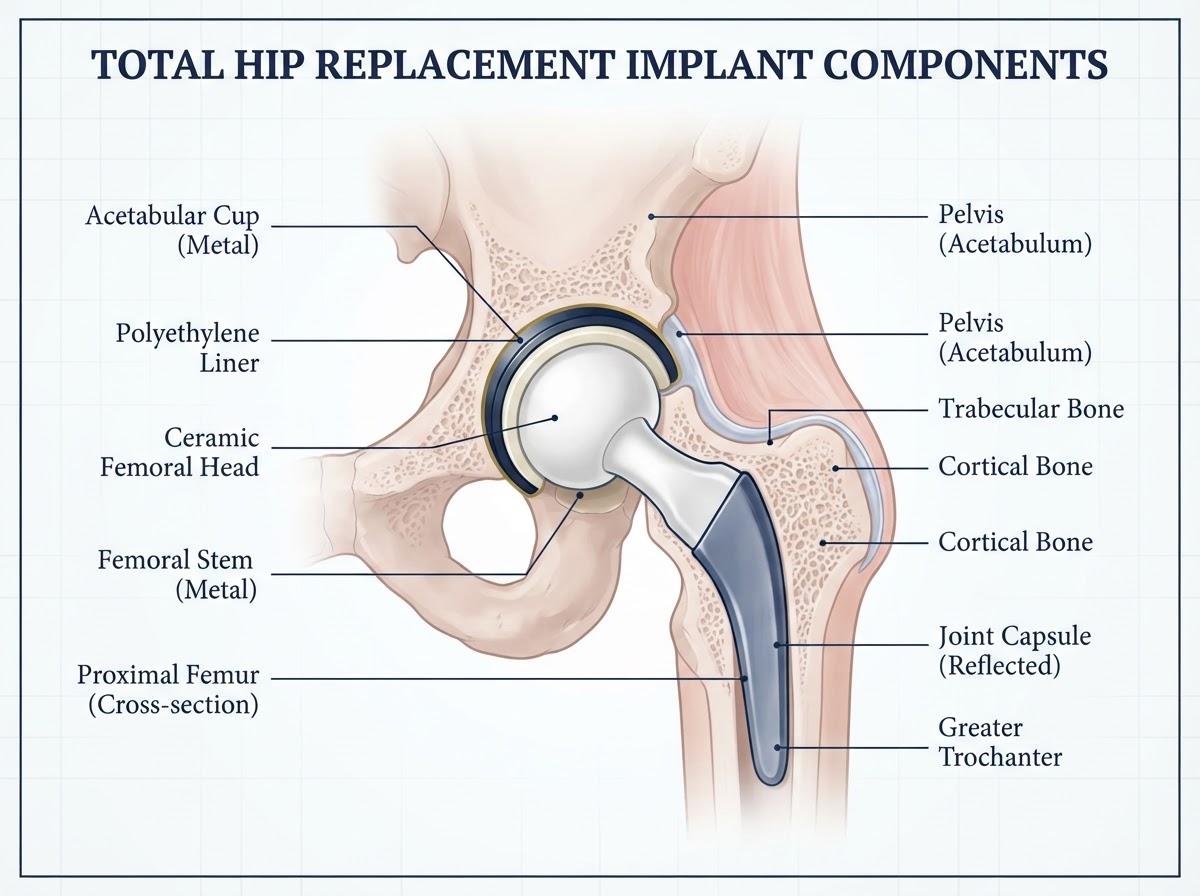
A total hip replacement consists of four main components working together as a modular unit: 1. Acetabular Cup: A hemispherical shell inserted into the prepared pelvic socket (acetabulum). 2. Acetabular Liner: An insert positioned inside the cup, acting as the socket's smooth articulate surface. 3. Femoral Head: A high-precision sphere (ball) attached to the neck of the stem, articulating inside the liner. 4. Femoral Stem: A metallic component inserted into the hollow shaft of the thigh bone (femur). Modular design allows surgeons to choose the exact combination of cup size, liner material, stem shape, and head diameter that best matches your anatomical dimensions and biomechanical needs. However, modularity also introduces mechanical interfaces (such as the junction between the head and stem neck) that must be carefully evaluated and engineered.
Cemented vs Cementless Hip Replacement
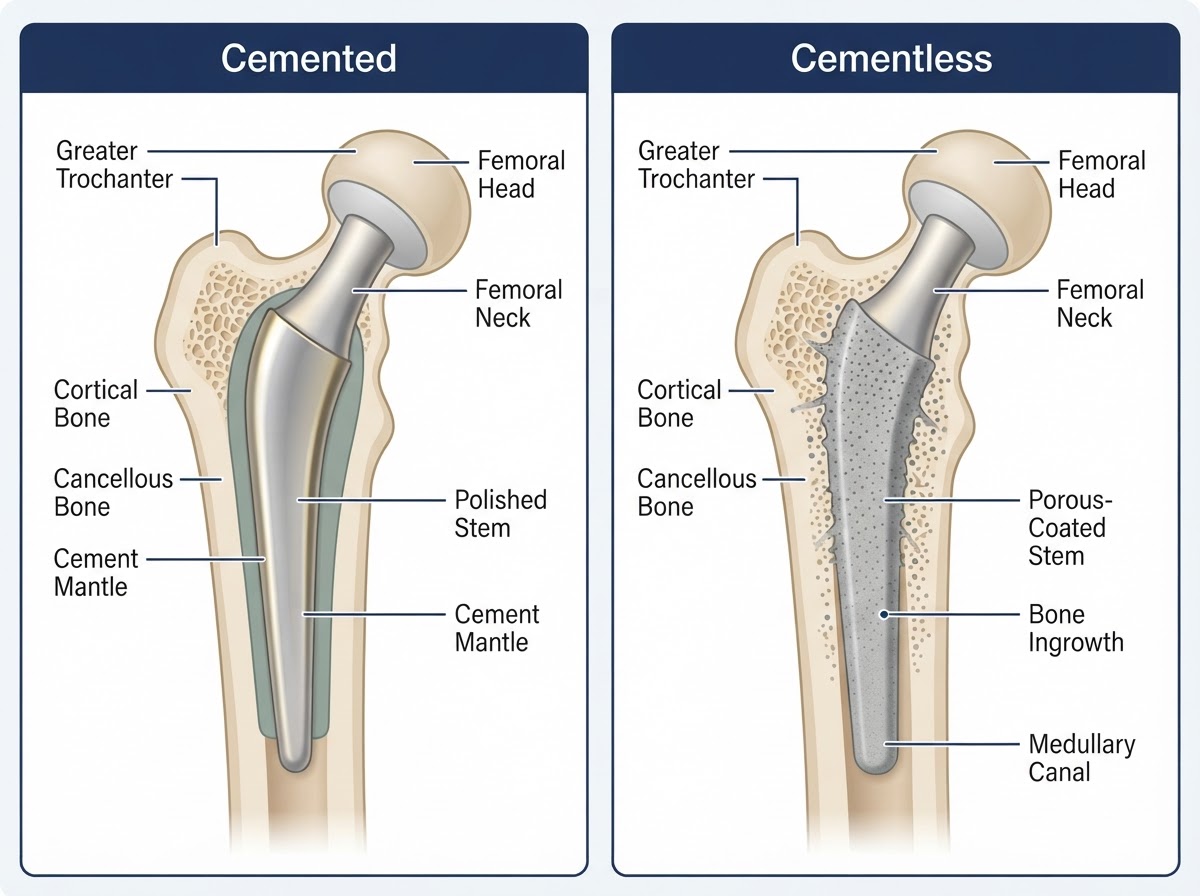
One of the most fundamental decisions in hip replacement is how the implants are fixed to the skeleton. There are two primary fixation philosophies: Cementless Fixation (Biological Fixation): Cementless components are coated with porous, textured, or hydroxyapatite-treated titanium/cobalt-chromium surfaces. Initial stability is achieved through a precise press-fit mechanical wedging into bone. Over the following weeks and months, living bone grows into the porous surface (osteointegration), creating permanent biological fixation. Cementless fixation requires good underlying bone density and carries a slight risk of intraoperative periprosthetic fracture if bone is fragile. Cemented Fixation (Mechanical Fixation): Cemented components use polymethyl methacrylate (PMMA) bone cement, which acts as a mechanical grout (not an adhesive) filling the space between implant and bone. Cemented fixation provides immediate, solid mechanical stability upon curing (within minutes). It is particularly indicated in older patients, those with osteoporotic or compromised bone, or wide, thin-walled femoral canals (Dorr Type C canal morphology). COMPARISON OF FIXATION METHODS: • Mechanism: Cementless = Osteointegration / press-fit; Cemented = PMMA bone cement interlocking. • Initial Stability: Cementless = Immediate mechanical press-fit; Cemented = Immediate rigid curing. • Secondary Stability: Cementless = Biological bone ingrowth over 6–12 weeks; Cemented = Mechanical cement sheath maintenance. • Bone Quality Required: Cementless = Good to normal bone density; Cemented = Suitable for osteoporotic/fragile bone. • Main Risks: Cementless = Periprosthetic fracture during insertion; Cemented = Aseptic loosening over decades, rare bone cement implantation syndrome.
Hybrid and Reverse Hybrid Hip Replacement
Rather than choosing strictly cemented or cementless fixation for both sides of the joint, surgeons often use hybrid fixations: • Hybrid Hip Replacement: Uses a cementless acetabular cup (where pelvic bone ingrowth is reliable and predictable) combined with a cemented femoral stem (providing reliable fixation in frail or osteoporotic femoral bone). • Reverse Hybrid Hip Replacement: Uses a cemented acetabular cup combined with a cementless femoral stem. This combination is common in certain European registries for selected anatomical indications. Hybrid fixation demonstrates excellent long-term survival in national registry reports and illustrates how surgeons adapt fixation to the distinct anatomical requirements of the pelvis versus the femur.
Femoral Stem Designs
Femoral stems are available in various geometric shapes and lengths, each designed for specific anatomical bone shapes and fixation concepts: • Straight Tapered Stems: Wedge-shaped stems designed to achieve biological fixation in the proximal and mid-femoral metaphysis. • Anatomical Stems: Curved to match the natural anterior bowing of the human femur. • Short Stems (Bone-Preserving Stems): Shorter implants anchored primarily in the upper femoral neck and metaphysis, leaving more femoral bone intact for potential future revision. Indicated in younger patients with strong bone stock. • Cemented Polished Tapered Stems: Smooth, polished stems that taper downward, designed to subside microscopic distances within the cement mantle over decades without losing stability (force-closed principle). No single stem shape fits all femurs; the choice depends on canal geometry (Dorr classification), cortical thickness, and bone quality.
Acetabular Components
The pelvic socket component must withstand high multidirectional forces while remaining rigidly fixed to pelvic bone: • Cemented Acetabular Cups: Polymethyl methacrylate or directly cemented polyethylene cups, historically proven but less frequently used in modern primary surgery. • Porous Metal Cementless Cups: Manufactured with advanced porous titanium or trabecular metal coatings that mimic native cancellous bone architecture, encouraging rapid bone ingrowth. • Modular Liners: Liners locked inside the metal cup shell, available in highly cross-linked polyethylene or ceramic formulations. Correct acetabular cup orientation — balancing inclination (tilt) and anteversion (forward tilt) — is vital for joint stability and wear reduction.
Bearing Surfaces: What Materials Are Used?
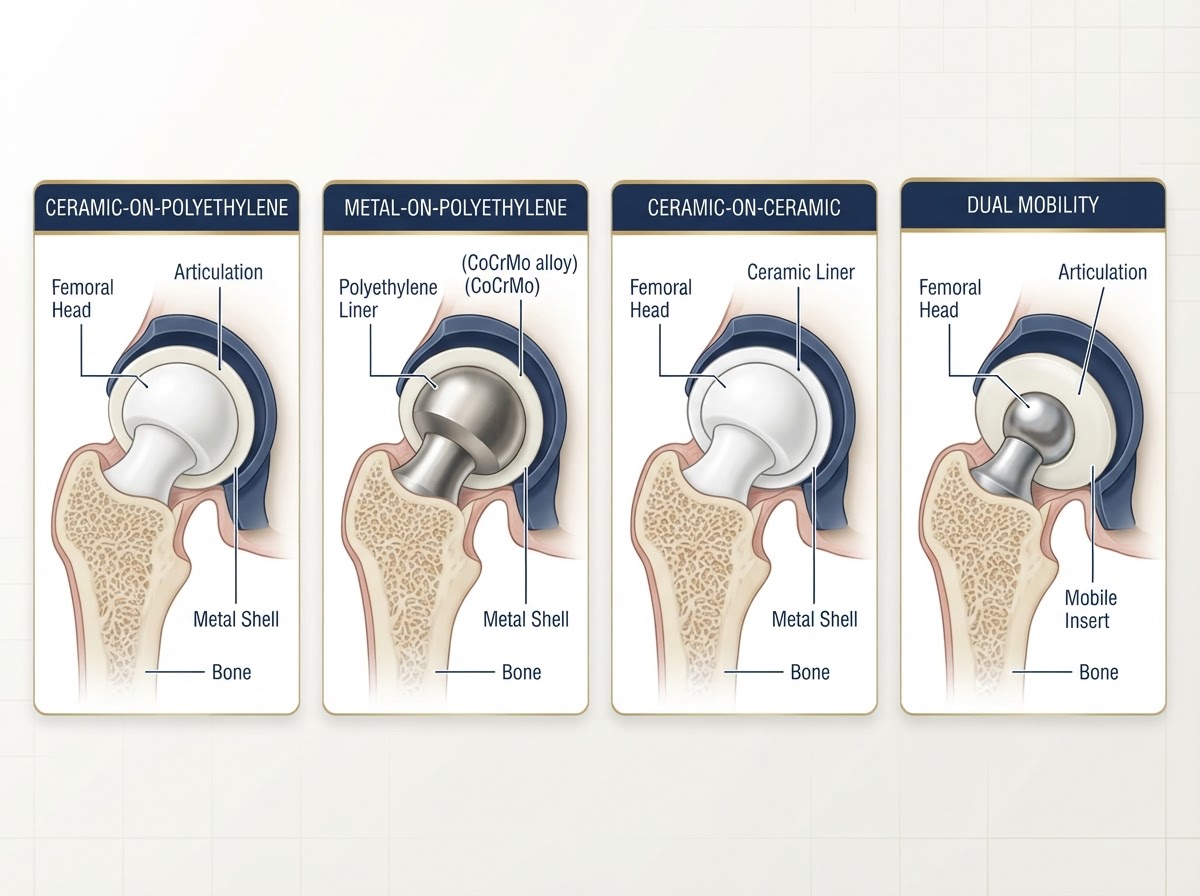
The 'bearing surface' is the contact articulation between the rotating ball (femoral head) and the stationary liner (acetabular insert). Material choice determines friction, wear particle generation, and long-term durability: 1. Ceramic-on-Highly Cross-Linked Polyethylene (CoP): Currently the most widely used bearing surface worldwide. Combines a smooth ceramic head with modern polyethylene infused with antioxidants (vitamin E) to dramatically minimise wear particles. 2. Metal-on-Highly Cross-Linked Polyethylene (MoP): A cobalt-chromium or stainless steel head articulating against polyethylene. Very reliable and cost-effective, though ceramic heads produce slightly lower wear rates. 3. Ceramic-on-Ceramic (CoC): Both head and liner are made of dense bioceramic (alumina/zirconia composite). Offers extremely low friction and near-zero wear, but carries a small risk of audible squeaking or ceramic fracture under high impact. BEARING SURFACES COMPARISON: • CoP (Ceramic on Polyethylene): Extremely low wear; excellent toughness; zero squeaking risk; universal choice. • MoP (Metal on Polyethylene): Very low wear with HXLPE; highly durable; cost-effective; potential trunnion corrosion in large metal heads. • CoC (Ceramic on Ceramic): Near-zero wear rate; inert biolayer; small squeaking risk (~1-3%); low fracture risk (<0.05%).
Ceramic vs Metal Femoral Heads
The choice of ball head material is critical to joint wear and corrosion resistance: • Ceramic Heads (Biolox Delta composites): Scratch-resistant, smooth, chemically inert, and produce lower friction against polyethylene liners. They eliminate metal ion release at the head-stem taper interface (trunnionosis). • Metal Heads (Cobalt-Chromium alloys): Durable and resistant to impact, but subject to micro-scratches over decades and potential corrosion at the neck junction when paired with large diameters. Modern clinical practice increasingly favours ceramic femoral heads across both younger and older patient demographics.
What About Metal-on-Metal Hip Replacements?
In the 2000s, large-diameter Metal-on-Metal (MoM) hip implants gained widespread popularity due to high jump distances and theoretical low wear. However, long-term monitoring revealed major clinical complications: • Metal Ion Release: Microscopic cobalt and chromium particles were released into blood and local tissues. • Adverse Local Tissue Reactions (ALTR / Pseudotumours): Inflammatory soft-tissue masses and muscle damage caused by metal hypersensitivity. Regulatory bodies and professional societies (AAOS, MHRA) issued safety alerts, and MoM implants are no longer recommended for routine primary hip replacement. Modern practice relies instead on highly cross-linked polyethylene and ceramic articulations.
Dual Mobility Hip Replacement
Dual Mobility (DM) technology uses two distinct concentric articulation points to maximise stability: 1. Small Inner Articulation: A small ceramic or metal head snaps inside a mobile polyethylene liner sphere. 2. Large Outer Articulation: The mobile polyethylene liner sphere articulates inside a polished metal acetabular cup. This double-bearing mechanism dramatically increases the head jump distance and range of motion before mechanical impingement occurs, reducing dislocation rates to under 0.5–1%. INDICATIONS FOR DUAL MOBILITY: • High risk of dislocation (neuromuscular disorders, lumbar spine fusion, Parkinson's disease). • Elderly or frail patients with poor muscle tone. • Revision hip surgery where recurrent instability is a concern. • Complex anatomical deformities or severe spinopelvic stiffness. LIMITATIONS: Slightly increased polyethylene volume, theoretical risk of intraprosthetic dislocation (IPD) over long-term wear.
Large Femoral Heads: Are Bigger Heads Better?
Historically, femoral head sizes were small (22mm or 28mm) to reduce polyethylene wear volume. However, small heads dislocate more easily. The introduction of Highly Cross-Linked Polyethylene (HXLPE) allowed surgeons to safely use larger head diameters (32mm and 36mm): • Increased Jump Distance: A larger head must travel further out of the socket before dislocating. • Greater Range of Impingement-Free Motion: Allows deeper hip flexion and rotation before the femoral neck hits the cup edge. • Trade-Off: Very large heads (>36mm) require thinner polyethylene liners unless a larger outer cup is used. Surgeons balance head diameter against liner thickness to optimise stability without compromising liner durability.
How Long Does a Hip Replacement Last?
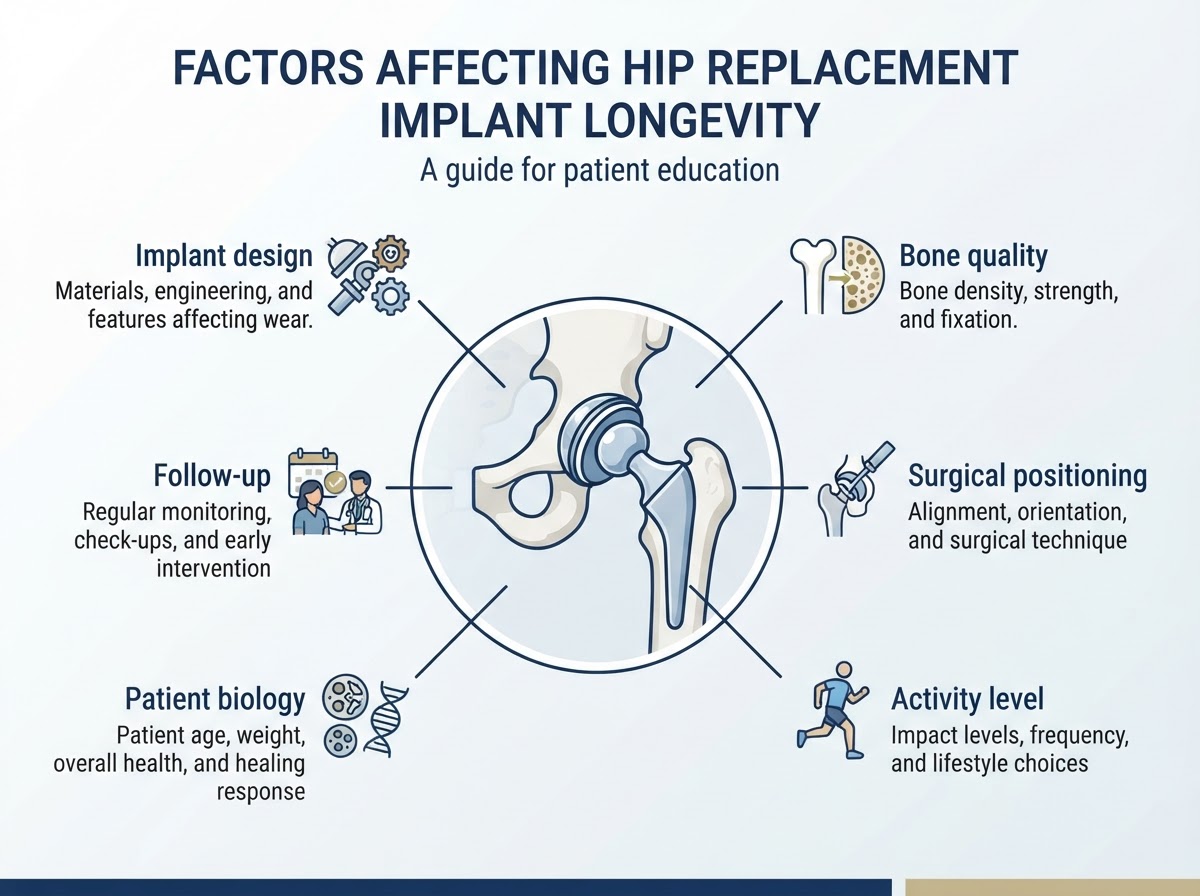
Patient discussions often center on how long an implant will last. Long-term population data from national joint registries (including the UK National Joint Registry, Australian NJRR, and Swedish Arthroplasty Register) and a landmark 2019 Lancet meta-analysis of over 215,000 cases show: • 15-Year Survival Rate: Approximately 89% to 92% of primary total hip replacements remain in place and functioning without revision. • 25-Year Survival Rate: Approximately 58% to 75% of hip replacements remain functional at 25 years. These statistics mean that for a patient receiving a hip replacement over age 60–65, there is a very high probability (>85–90%) that the original implant will last for their entire lifetime. However, registry statistics represent population averages; individual implant lifespan depends on age, activity level, bone quality, implant positioning, and biological factors.
What Causes a Hip Replacement to Wear Out or Fail?
When a hip replacement fails requiring revision surgery, it is usually due to one of the following documented mechanisms: 1. Aseptic Loosening: The single most common long-term failure mode. Microscopic wear particles (traditionally from older polyethylene) trigger a local immune macrophage response that gradually reabsorbs surrounding bone (osteolysis), causing the implant to uncouple from bone. 2. Periprosthetic Fracture: A fracture of the femur or pelvis around the implant, often resulting from a fall in patients with osteoporosis. 3. Dislocation / Instability: The ball coming out of the socket, often due to component malposition, soft-tissue laxity, or spinopelvic imbalance. 4. Infection (Periprosthetic Joint Infection - PJI): Bacterial colonisation of the implant surface, requiring medical and surgical eradication. 5. Implant Mechanical Failure: Rare structural fracture of a stem, head, or cup.
Does Age Influence Implant Selection?
Age is a fundamental consideration in implant selection, but biological age and bone quality matter far more than chronological age: • Younger Patients (<55–60 years): Tend to have higher physical activity demands and longer life expectancy. Surgeons typically choose cementless stems with ceramic-on-polyethylene or ceramic-on-ceramic bearings, and bone-preserving short stems when appropriate. • Older Patients (>75 years): May have thinner cortical bone (osteoporosis) and slower bone ingrowth capacity. Cemented stems or hybrid fixation offer immediate, secure stability and lower periprosthetic fracture risk. • Middle-Aged Patients (60–75 years): Implant choice is tailored individually based on Dorr bone canal shape, bone density, physical active pursuits, and spinal movement.
Does Activity Level Affect Implant Longevity?
Modern total hip replacements allow patients to return to active, fulfilling lifestyles. However, physical activities exert different mechanical stresses on implants: Recommended Low-to-Moderate Impact Activities: • Walking, hiking, swimming, cycling, golf, doubles tennis, rowing, resistance training with proper form. High-Impact Activities to Approach with Caution: • Running/jogging, singles tennis, high-impact contact sports, heavy weightlifting. While modern ceramic and HXLPE bearings tolerate physical activity remarkably well, repetitive heavy impact can accelerate mechanical stress at bone-implant interfaces over multiple decades.
Implant Selection: A Personalised Decision
There is no 'one size fits all' hip replacement. Optimal implant selection requires an individualised clinical decision matrix balancing: • Patient Anatomy: Femoral canal shape (Dorr A, B, or C), acetabular depth, femoral neck offset. • Bone Biology & Quality: Normal bone density vs osteopenia/osteoporosis. • Functional Demands: Sedentary lifestyle vs active athletic pursuits. • Dislocation Risk Factors: Spinal stiffness, previous lumbar spine fusion, neuromuscular weakness. • Medical History: Previous hip surgeries, allergies, metabolic bone disease. Your orthopaedic surgeon uses these clinical variables to select the precise combination of stem geometry, cup design, fixation method, and bearing materials for your body.
Does the Surgical Approach Affect Implant Longevity?
As explored in Article 18 (Direct Superior vs Anterolateral Hip Replacement), the surgical approach defines the path used to reach the joint. However, long-term registry data demonstrate that component positioning, implant selection, and surgical precision have a far greater impact on implant longevity than the choice of surgical approach alone. Whether performed via a Direct Superior, Anterolateral, Direct Anterior, or Posterior approach, a well-placed implant with accurate leg length and offset restoration achieves excellent long-term survivorship.
The Importance of Implant Positioning and Surgical Planning
Even the highest-grade ceramic implant will fail prematurely if positioned inaccurately. Precise surgical alignment dictates mechanical load distribution: • Acetabular Cup Orientation: Target inclination (tilt) is typically 40° ± 10°, and anteversion (forward angle) is typically 15°–25° (Lewinnek safe zone, adapted to individual spinopelvic motion). • Spinopelvic Relationship: When sitting and standing, the pelvis tilts. Surgeons evaluate standing and sitting radiographs to ensure the cup does not cause impingement during daily posture changes. • Offset & Leg Length: Restoring lateral offset maintains abductor muscle tension, reduces limp, and preserves joint stability.
Can a Hip Replacement Be Revised?
If an artificial hip wears out, loosens, or experiences a complication after 20–30 years, it can be replaced through revision hip arthroplasty: • Revision Arthroplasty: Involves removing the failed component(s) and installing specialised revision stems or cups designed to anchor securely into altered bone. • Complexity: Revision surgery is technically more demanding than primary replacement and requires specialized surgical expertise and custom or modular revision implants. • Outcome: Modern revision implants achieve strong, functional results, allowing patients to maintain mobility for decades after revision.
Follow-up After Hip Replacement
Routine long-term follow-up is an important part of hip joint care, even when your hip feels completely pain-free and normal: • Radiographic Monitoring: Periodic X-rays (e.g., at 1 year, 5 years, and every 5 years thereafter) detect subtle bone changes, osteolysis, or liner wear before symptoms develop. • Early Detection: Identifying early bone resorption allows minor liner exchanges or corrective adjustments before major bone damage occurs. • Clinical Assessment: Evaluating limp, muscle strength, and range of motion ensures lasting joint health.
Questions to Ask Your Surgeon Before Hip Replacement
When consulting your orthopaedic specialist on the Costa Blanca, consider asking these evidence-based questions: 1. Which implant fixation method (cemented, cementless, or hybrid) do you recommend for my bone quality? 2. Which bearing surface combination (Ceramic-on-Polyethylene, Ceramic-on-Ceramic, etc.) fits my age and activity level? 3. What femoral head size will be used to optimise joint stability? 4. Do I have anatomical factors (such as spine stiffness or bone shape) that suggest a Dual Mobility implant? 5. How do you plan component orientation, offset, and leg length restoration for my surgery? 6. What long-term follow-up schedule do you recommend?
Clinical Conclusion
A total hip replacement is a highly sophisticated orthopaedic intervention capable of eliminating chronic joint pain and restoring independent mobility for decades. Durable outcomes are not guaranteed by any single branded material or marketing claim, but by individualized matching of implant geometry, fixation technique, bearing materials, and precise surgical positioning to your unique anatomy. By understanding how implants are chosen, you can engage in meaningful, informed shared decision-making with your specialist surgeon.
Individualised decision-making for long-term hip health
Successful, long-lasting total hip replacement relies on individualised clinical planning. Fixation strategy, bearing materials, component geometry, and component positioning must be tailored to your bone density, age, anatomy, and lifestyle. National joint registries confirm that over 85–90% of modern hip replacements remain fully functional beyond 15–20 years. On the Costa Blanca — Alicante, Torrevieja, Orihuela Costa, and La Zenia — Dr Pablo Banchero provides evidence-based orthopaedic evaluations to guide your implant choice.
References & scientific evidence
- Evans JT, Evans JP, Walker RW, Blom AW, Whitehouse MR, Sayers A.. How long does a hip replacement last? A systematic review and meta-analysis of case series and national registry reports with at least 15 years of follow-up.. The Lancet, 2019.Meta-analysisDOI: 10.1016/S0140-6736(18)31665-9View source
- National Joint Registry (NJR) for England, Wales, Northern Ireland and the Isle of Man. National Joint Registry 21st Annual Report — Hip, Knee, Ankle, Elbow and Shoulder Arthroplasty: Outcomes and Survivorship.. National Joint Registry, 2024.Observational studyView source
- Australian Orthopaedic Association National Joint Replacement Registry (AOANJRR). Hip, Knee & Shoulder Arthroplasty: Annual Report 2024.. AOA NJRR, 2024.Observational studyView source
- Swedish Arthroplasty Register. Annual Report on Total Hip Arthroplasty Outcomes.. Swedish Arthroplasty Register, 2023.Observational studyView source
- American Joint Replacement Registry (AJRR). AJRR 2023 Annual Report on Hip and Knee Arthroplasty Data.. American Academy of Orthopaedic Surgeons (AAOS), 2023.Observational studyView source
- Bayliss LE, Culliford D, Monk AP, et al.. The effect of patient age at intervention on risk of implant revision after total hip replacement: population-based cohort study.. BMJ, 2017.Observational studyDOI: 10.1136/bmj.j1411View source
- Tsikandylakis G, Kärrholm J, Hailer NP, et al.. No difference in survivorship between cemented and uncemented total hip arthroplasty in young patients: a registry study of 11,256 hips.. Acta Orthopaedica, 2018.Observational studyDOI: 10.1080/17453674.2018.1479869View source
- D'Antonio JA, Sutton K.. Ceramic-on-ceramic bearings in total hip arthroplasty: 15 to 21-year results.. The Journal of Arthroplasty, 2021.Observational studyDOI: 10.1016/j.arth.2021.02.045View source
- Boyer B, Neri T, Di Iorio A, et al.. Dual-mobility cups in primary total hip arthroplasty: systematic review and meta-analysis of dislocation and revision rates.. International Orthopaedics, 2022.Meta-analysisDOI: 10.1007/s00264-022-05412-2View source
- Kurtz SM, Lau E, Watson H, Schmier JK, Parvizi J.. Economic burden of periprosthetic joint infection in the United States.. Journal of Arthroplasty, 2012.Observational studyDOI: 10.1016/j.arth.2012.02.022View source
- NICE Guideline NG157. Joint replacement (primary): hip, knee and shoulder. Clinical guideline.. National Institute for Health and Care Excellence, 2020.Clinical guidelineView source
- AAOS Clinical Practice Guideline. Management of Osteoarthritis of the Hip.. American Academy of Orthopaedic Surgeons, 2023.Clinical guidelineView source
- Lewinnek GE, Lewis JL, Tarr R, Compere CL, Zimmerman JR.. Dislocations after total hip-arthroplasty replacements.. Journal of Bone and Joint Surgery Am, 1978.Observational studyPMID: 670295View source
- Vigdorchik JM, Sharma AK, Elbuluk AM, et al.. Spinopelvic dysplasia and hypermobility increase dislocation risk in total hip arthroplasty: a functional planning protocol.. The Bone & Joint Journal, 2021.Observational studyDOI: 10.1302/0301-620X.103B7.BJJ-2020-2391.R1View source
- Kayani B, Konan S, Tahmassebi J, Pietrzak JR, Haddad FS.. Robotic-assisted total hip arthroplasty improves component positioning and accuracy: a prospective cohort study.. The Bone & Joint Journal, 2019.Observational studyDOI: 10.1302/0301-620X.101B9.BJJ-2019-0255.R1View source
Frequently asked questions

Dr. Pablo Banchero Lasalvia
Orthopaedic Surgeon · Traumatology Team
- Author:
- Dr. Pablo Banchero Lasalvia
- Medical reviewer:
- Dr. Pablo Banchero Lasalvia
- Published:
- 2 November 2026
- Medical review date:
- 2 November 2026
- ·
- 24 min read
Discuss Your Implant Options via WhatsApp
Request a private orthopaedic assessment with Dr Pablo Banchero to discuss implant selection, fixation methods, bearing surfaces, and individual longevity expectations for your hip replacement.
Official number: +34 602 99 22 22