
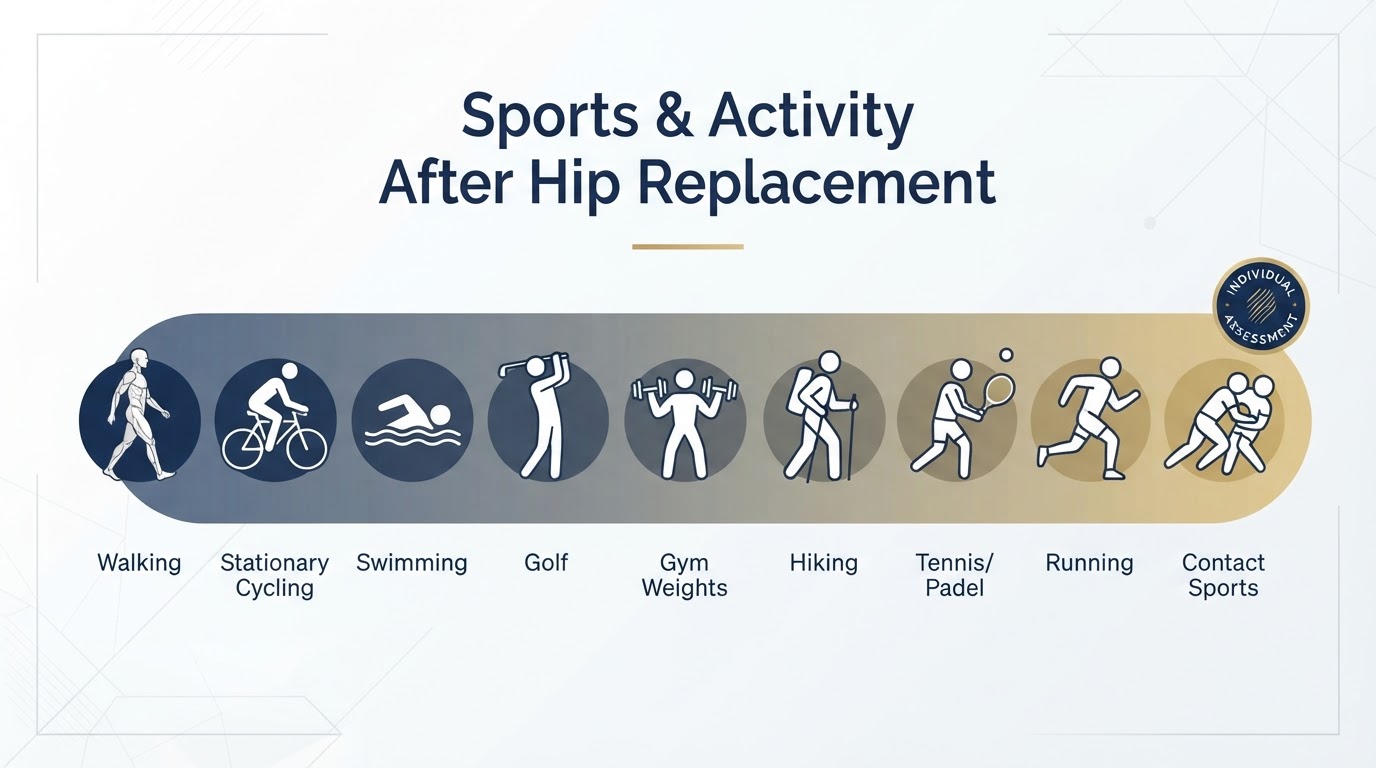
One of the most common questions after total hip replacement (total hip arthroplasty) is not 'how long will I recover?' but 'what can I do afterwards?' For many patients, the pain relief of a well-functioning hip is precisely what makes an active life possible again. Modern hip arthroplasty is designed to relieve pain, restore mobility and improve quality of life — and a large body of orthopaedic evidence confirms that physical activity after hip replacement is generally beneficial for cardiovascular health, muscle strength, balance, bone density and overall wellbeing. This guide answers the questions patients ask most often: whether they can walk comfortably, cycle, swim, play golf, return to the gym, hike the coastal paths of the Costa Blanca, or return to tennis and padel. The honest clinical answer is that many patients return to a remarkably active life, but the type, intensity and timing of activity must be adapted to the individual — the implant, the surgical approach, bone quality, recovery and sporting experience all matter. No hip replacement guarantees a return to preoperative athletic performance, and not every sport suits every patient. What follows is a practical, evidence-based framework for making those decisions sensibly.
Section 1: Introduction — Can you live an active life after hip replacement?
Modern total hip arthroplasty is among the most reliable operations in orthopaedic surgery, consistently relieving the pain of advanced hip osteoarthritis and restoring joint mobility. Restoring that mobility is not an end in itself: the purpose is to let you live better. Regular physical activity after hip replacement supports cardiovascular health, maintains muscle strength and balance, protects bone density, assists weight management and preserves independence — and the Enhanced Recovery After Surgery (ERAS) consensus actively encourages early, progressive mobilisation. Many patients return to a genuinely active lifestyle, but it is essential to distinguish four very different outcomes: returning to normal daily activities; returning to recreational exercise; returning to competitive sport; and returning to high-impact or contact activity. These are not equivalent. Walking to the shops and playing competitive singles tennis place very different demands on an artificial joint, and the recommendations that follow make that distinction explicit rather than treating every activity as the same.
Section 2: What determines your activity level after hip replacement?
How much activity is appropriate after hip replacement is an individual clinical judgement, not a blanket rule. The relevant factors include your age and general health; preoperative fitness and walking ability; your previous sporting experience and skill; muscle strength and neuromuscular control, particularly of the hip abductors; bone quality; implant fixation (cemented versus uncemented); the bearing surface and implant design; the surgical approach and how the soft tissues were managed; intraoperative stability; the quality and completeness of your recovery; body composition; and any associated knee, spine or cardiovascular conditions. Importantly, age alone should not determine activity recommendations — a fit, active 72-year-old with good abductor strength may be a better candidate for demanding recreational sport than a deconditioned younger patient. Recommendations must be individualised, which is why a meaningful return-to-activity conversation with your surgeon is more useful than a generic online list of 'allowed' and 'forbidden' sports.
Section 3: Walking after hip replacement
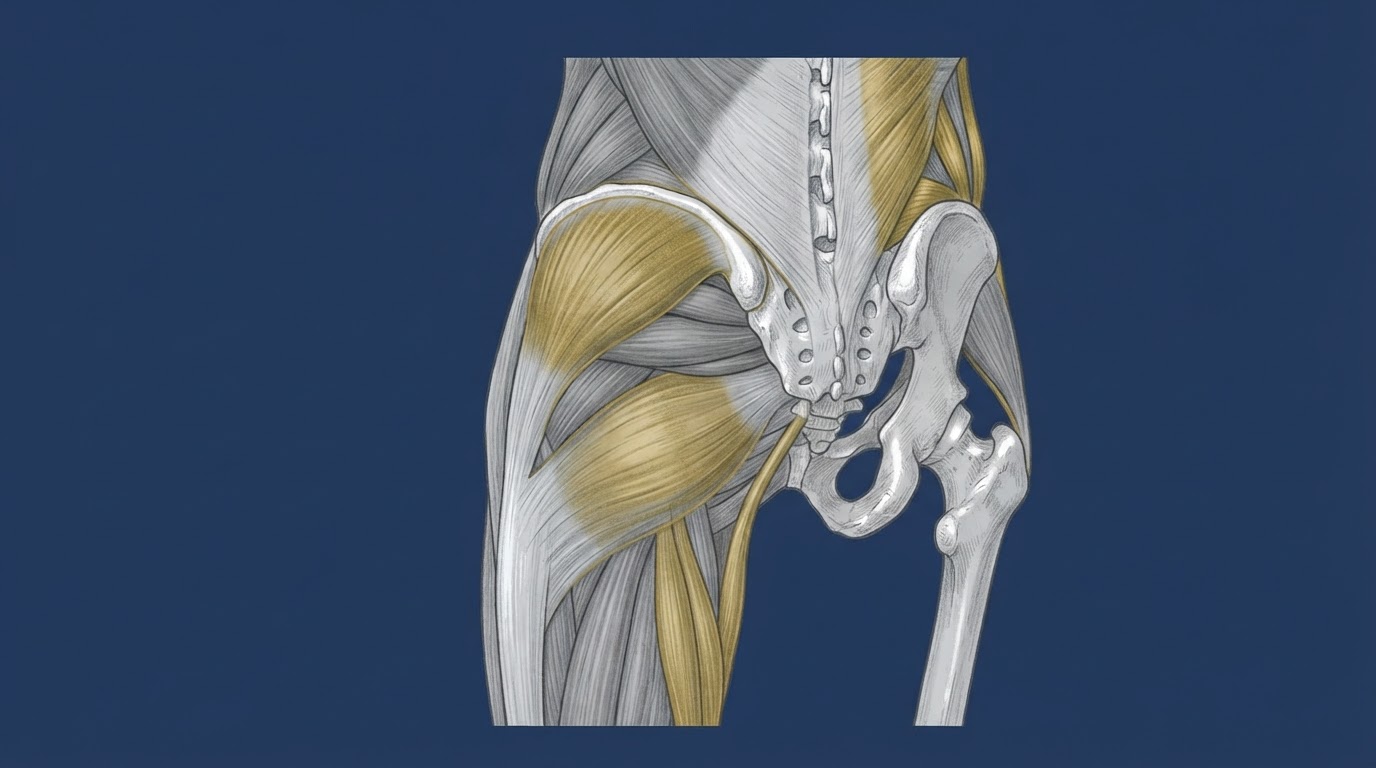
Walking is the cornerstone of life after hip replacement and, for the great majority of patients, one of the most accessible and beneficial activities. After recovery, the goal is not simply covering distance but restoring a normal, symmetrical gait pattern — upright posture, equal step length, smooth heel-to-toe roll and an absence of compensatory limping. Walking aids are used during early recovery to protect the gluteus medius until it can stabilise the pelvis in single-leg stance; discarding them too early reinforces a lurching gait that is hard to unlearn. Distance is then increased gradually based on comfort rather than an arbitrary step-count target. As abductor and extensor strength returns, walking on flat ground, gentle inclines and eventually uneven surfaces becomes progressively more comfortable. Walking is not a compromise activity: for implant longevity, joint health and general fitness, sustained walking is the single most valuable habit most patients can build after hip replacement.
Section 4: Cycling and stationary bicycle
Cycling is frequently recommended after hip replacement because it combines low joint impact with active hip flexion, controlled range of motion and aerobic conditioning. During early rehabilitation, a stationary bicycle with no or minimal resistance is an excellent tool for restoring hip mobility and leg control without loading the joint; the saddle provides stability while the controlled pedal arc avoids sudden movements. As recovery progresses, outdoor recreational cycling can be reintroduced, with saddle height adjusted so that you never force hip flexion beyond your comfortable range and mounting and dismounting remain controlled. Because balance, traffic and the demands of mounting are real considerations, outdoor cycling is best resumed after clinical clearance, adequate balance recovery and confidence — not on a fixed calendar date. Recreational cycling on flat, familiar terrain suits most well-recovered hips; steep climbs, clipless pedals and aggressive road cycling raise the demands and deserve individual discussion.
Section 5: Swimming and aquatic exercise
Swimming and aquatic exercise are popular after hip replacement because water provides buoyancy that dramatically reduces joint loading while offering smooth resistance for strengthening. The one non-negotiable rule is that the surgical wound must be fully healed and dry before you enter a pool, and you should have medical clearance — immersion before wound healing risks infection. Once cleared, aquatic walking, water-based strengthening and gentle lap swimming are well tolerated. Different strokes place different demands on the hip: freestyle and backstroke involve a smooth, low-impact kick that suits most patients; breaststroke involves wider hip abduction and external rotation and may be less comfortable for some patients, particularly in the early months. There is no universal prohibition on a stroke, but it is sensible to reintroduce strokes one at a time, start with the most comfortable and progress only as symptoms allow. Aquatic exercise is also an excellent option during hot Costa Blanca summers when land-based activity is less appealing.
Section 6: Golf after hip replacement
Golf is one of the recreational sports most commonly resumed after hip replacement, and many patients return to it successfully. The considerations are practical: walking the course is excellent conditioning, though using a golf cart initially is sensible while balance and endurance rebuild. The golf swing involves substantial hip rotation and rotational loading through the trunk and pelvis, so hip mobility, core stability and abductor strength all matter. Return to practice is best approached gradually — starting with putting and short pitches, progressing to short irons and finally to the full swing, ideally with your physiotherapist or golf professional watching your mechanics. Individual assessment matters because dislocation risk during golf depends on surgical approach, component positioning and your specific stability; there is no evidence that golf universally endangers a well-functioning hip, but nor is there a universal 'safe' guarantee. Discuss your specific case with your surgeon before committing to full rounds.
Section 7: Gym and resistance training
Progressive resistance training is valuable after hip replacement — not something to avoid. Restoring strength in the quadriceps, gluteus maximus, gluteus medius and minimus, hip extensors, hip abductors, core stabilisers and balance muscles protects the joint, normalises gait and reduces fall risk. The training can progress through bodyweight exercises, resistance bands, weight machines (which guide and constrain movement) and, eventually, carefully selected free weights. What matters far more than the type of resistance is movement quality and graded load progression: technique, controlled tempo and full range without pain come before adding load. There is no single universal gym programme; suitable exercises and progression are individualised to your recovery, abductor control and any restrictions. Maximal lifting, aggressive loading and high-volume impact training are not appropriate without individual assessment and explicit surgeon clearance, but controlled, progressive gym training is broadly encouraged and supports both the hip and long-term general health.
Section 8: Hiking and walking in nature
Hiking is an appealing activity for many Costa Blanca patients and is generally achievable after a good recovery — but it is more demanding than ordinary walking. Flat, well-graded coastal walks are easier than uneven mountain trails; descents load the hip differently to ascents; and loose surfaces, roots and stones require greater balance, proprioception and ankle-hip stability than a pavement. Walking poles help by improving stability, reducing load on the operated leg and providing confidence on uneven ground, and sturdy, supportive footwear is essential. Distance and difficulty should be increased progressively, and fatigue should be managed honestly — a tired leg compensates and gait degrades, which is when stumbles happen. Examples of general outdoor activity such as coastal promenades and moderate, well-marked nature trails suit many recovered patients, but no specific route is medically suitable for everyone; the right trail is the one that matches your balance, endurance and recovery.
Section 9: Tennis, padel and racquet sports
Racquet sports deserve more careful consideration than walking or cycling because they combine lateral movement, rapid changes of direction, pivoting, acceleration and deceleration, single-leg balance and impact forces — demands that are quite different from steady aerobic activity. The distinction between recreational and competitive intensity is important: social doubles or relaxed padel at a moderate pace is very different from competitive singles on a hard court. For many well-recovered patients, racquet sports can be reintroduced gradually, with adaptation of playing intensity, court surface (softer surfaces are gentler), frequency and footwear, and only after abductor strength and balance are genuinely restored. They are neither universally safe nor universally contraindicated; the decision is individualised and made with your surgeon, taking into account implant stability, approach, your sporting skill and how the hip behaves with cutting and pivoting movements.
Section 10: Running and high-impact sports
Running is the activity that causes most debate after hip replacement. The concerns are real and biomechanical: repetitive impact loading, high joint reaction forces, and the small but genuine cumulative risks of accelerated polyethylene wear and, in rare cases, periprosthetic fracture. It would be inaccurate to claim that running inevitably causes implant failure — many active patients run recreationally without early problems — and equally inaccurate to claim that running is universally safe after hip replacement. The honest position is that high-impact activity deserves an individualised discussion with your surgeon that weighs your bone quality, implant characteristics and fixation, body weight, previous running experience and goals. A clear distinction must be drawn between occasional recreational jogging on soft ground and competitive distance running or contact and collision sports, which carry materially higher concern because of both wear and traumatic injury risk. For most patients, lower-impact conditioning offers the fitness benefits of running with a better risk profile.
Section 11: Which sports are generally more compatible with hip replacement?
A balanced way to think about activity after hip replacement is to group activities by the demands they place on the joint. The table below is a general educational guide — not individual medical clearance — and recommendations genuinely vary by patient, implant and sporting demands. | Activity | General considerations | |---|---| | Walking | Commonly encouraged; the foundation of an active life after hip replacement | | Stationary cycling | Often suitable during and after recovery; low impact, controlled range | | Outdoor cycling | Balance, control and mounting matter; resume after clearance | | Swimming | Appropriate once the wound is fully healed and cleared | | Golf | Often possible with a progressive, technique-led return | | Gym and resistance exercise | Suitable with controlled progression; movement quality first | | Hiking | Depends on terrain, balance, endurance and use of poles | | Tennis / padel | Requires individual assessment; recreational intensity first | | Running | Individualised risk discussion with your surgeon | | Contact sports | Greater concern because of impact and trauma risk | No activity on this list is rigidly 'safe' or 'unsafe'; each entry is a starting point for a conversation, not a verdict.
Section 12: Does sport affect the longevity of a hip replacement?
The relationship between physical activity and long-term implant survival is genuinely complex. Implant wear depends on the bearing surface, the number and magnitude of load cycles, impact loading, activity intensity, implant fixation and positioning, patient age and body weight, bone quality and the specific performance of your implant. It is important to distinguish moderate physical activity — which is broadly beneficial and does not damage a well-functioning, well-positioned hip replacement — from high cumulative loading, high-impact activity and contact trauma, each of which carries a different risk profile. We do not claim that normal walking or moderate exercise damages a hip replacement; the evidence does not support that. Nor do we attach invented numerical estimates of wear or failure risk to individual sports, because reliable sport-specific longevity figures do not exist. The most useful framing is that staying active at a moderate level is good for both you and the joint, while higher-impact and contact activity raises considerations that deserve an individualised conversation. Long-term arthroplasty registry data — rather than marketing claims — should guide expectations.
Section 13: Modern implants and bearing surfaces
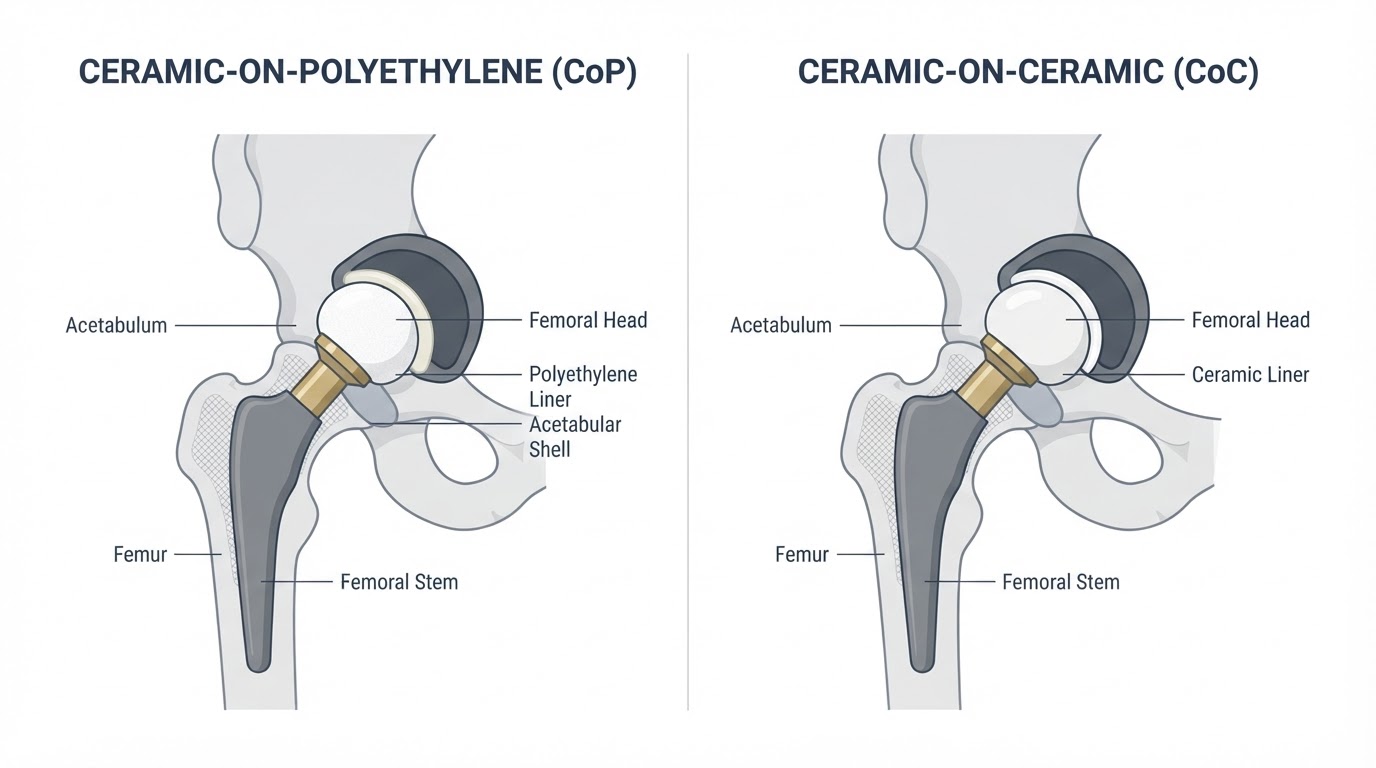
The implant and bearing surface influence the wear characteristics of a hip replacement and therefore play a role in the activity conversation. Modern bearings commonly include highly cross-linked polyethylene (reducing wear versus conventional polyethylene), ceramic-on-polyethylene (low wear with a ceramic head), ceramic-on-ceramic (very low wear with the trade-off of rare squeaking or component fracture risk) and metal-on-polyethylene in some indications. Fixation may be cemented or cementless; uncemented implants need bone ingrowth, so early weight-bearing and activity protocols respect that integration period. It is important to be clear about what bearing surfaces do and do not determine: they influence wear performance, but they do not independently decide which sports an individual can perform, and no single bearing surface is universally superior for every patient. Choosing an implant is a clinical decision made with your surgeon based on your age, activity expectations, bone quality and anatomy — not a sporting 'upgrade'. Promotional claims about one technology outperforming another should be treated with healthy scepticism.
Section 14: How to return to sport safely
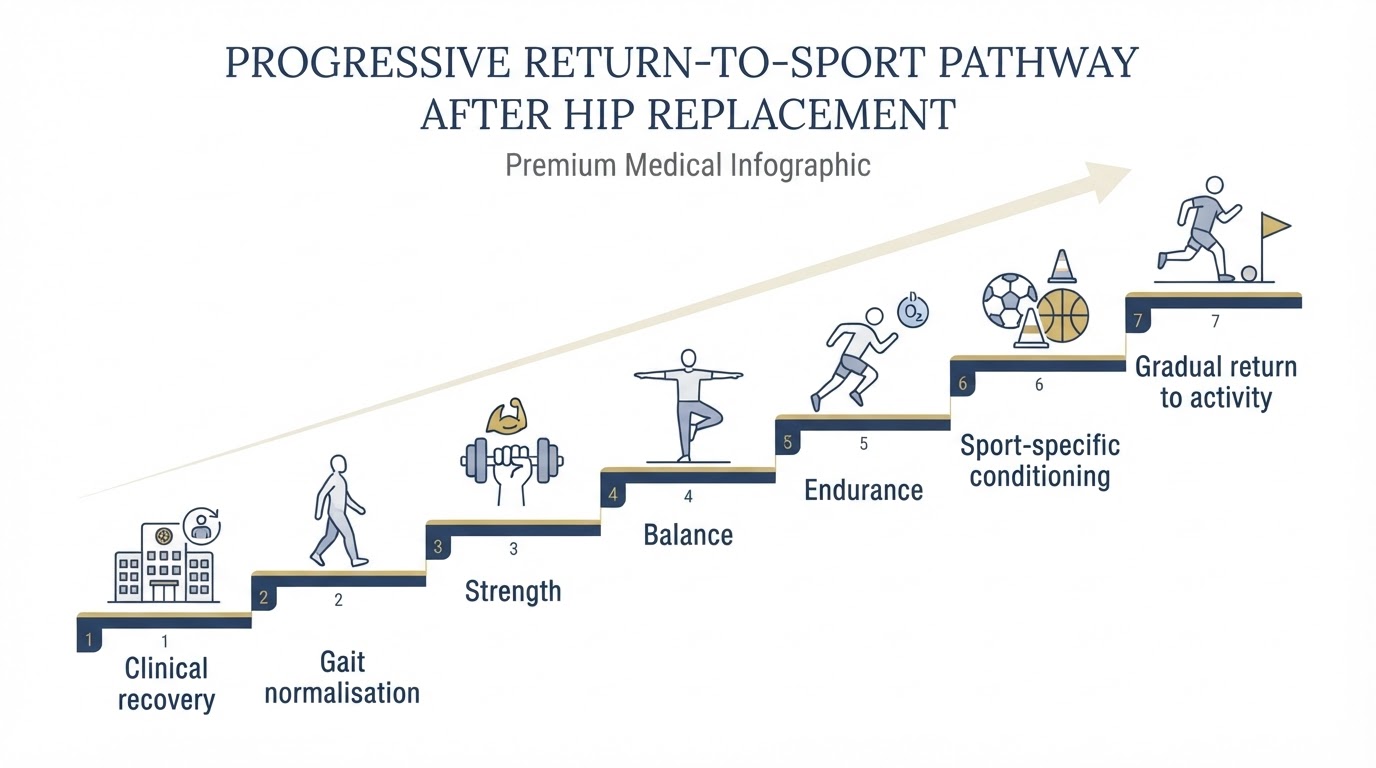
A safe return to activity is built on a progressive, functional pathway rather than a calendar date alone. A sensible framework runs: (1) clinical recovery and wound healing; (2) restoration of basic mobility; (3) gait normalisation; (4) strength recovery, especially of the abductors; (5) balance and proprioception; (6) sport-specific conditioning; (7) gradual return to the activity itself, beginning at reduced intensity; and (8) ongoing monitoring of symptoms and functional response. Each stage should be comfortable and symptom-limited; progressing because a fixed number of weeks has passed, before strength and balance are genuinely ready, is how avoidable problems occur. Surgeon and physiotherapist guidance is central throughout — they can assess your abductor control, gait symmetry and balance objectively and advise when each stage is met. The guiding principle is functional readiness first, time second.
Section 15: Warning signs during physical activity
Most activity after hip replacement is comfortable, but certain symptoms during or after exercise warrant stopping and seeking medical advice: new or persistent groin pain; sudden severe hip pain; a new inability to bear weight; increasing pain after a period of previously successful activity; recurrent swelling or warmth around the hip; any new instability or giving-way sensation; or mechanical symptoms (clicking, catching, locking) associated with a clear drop in function. These deserve assessment rather than being 'worked through'. Separately, chest pain, sudden breathlessness or other symptoms suggestive of a thromboembolic complication require emergency assessment — in Spain, call 112. It is equally important not to pathologise ordinary post-exercise muscle fatigue: the sore gluteal or thigh ache that follows a new or harder session is usually normal muscular adaptation and improves with rest, provided the joint itself remains comfortable and stable.
Section 16: Maintaining long-term muscle and bone health
Protecting the investment of a hip replacement is largely about protecting your general musculoskeletal health. Resistance exercise maintains the abductor and core strength that stabilises the joint; balance training reduces fall risk; aerobic conditioning supports cardiovascular health; and adequate protein intake supports muscle maintenance. Calcium and vitamin D are relevant where clinically indicated (for example, with osteoporosis or deficiency) but should not be taken indiscriminately without assessment. Weight management reduces the load on the bearing surface; smoking cessation improves bone healing and general health; and osteoporosis and metabolic conditions should be actively managed. Prolonged inactivity is the real enemy of a hip replacement — it accelerates muscle loss and deconditioning. Maintaining general health supports mobility and independence, but it does not guarantee implant longevity; a well-functioning joint still needs sensible, individualised activity choices for life.
Section 17: Does the surgical approach determine which sports you can practise?
Surgical approach — direct superior, anterolateral, anterior or posterior — can influence early recovery, the soft tissues disturbed and any postoperative restrictions, so it has some bearing on the return-to-sport conversation. Approaches that preserve or repair the abductors may allow earlier abductor activation; approaches that repair the posterior capsule may carry different early dislocation considerations. However, it would be wrong to claim that one approach automatically permits more sports than another, or to extrapolate evidence from the direct anterior approach to the direct superior or anterolateral approaches, which differ in muscle management, patient positioning and exposure. The practical point is that your surgeon's individual findings, component positioning and soft-tissue repair usually matter more than the skin incision; approach is one factor in the individualised plan, not the determinant of your sporting future. Discuss your specific approach and its implications with your surgeon.
Section 18: An active lifestyle after hip replacement — a personal plan
Because activity recommendations are individualised, the most useful outcome is a personal plan rather than a generic list. A good plan considers your goals, your preoperative activity level, the implant characteristics, your bone and muscle condition, the demands of the sport you want to return to, your recovery and your surgeon's clinical findings. Different patient profiles illustrate this: a patient whose goal is simply pain-free daily walking needs a different plan from one who wants to cycle and swim; a returning golfer's progression differs from a former competitive athlete's, where expectations may need honest recalibration; an older patient prioritising balance, strength and independence has different priorities again. The common thread is that treatment and activity recommendations should be tailored to you. A hip replacement is not a single, standard activity prescription — it is the starting point for an individualised, active and rewarding next chapter, supported by your surgeon and physiotherapist.
Section 19: Frequently asked questions
Practical answers to the questions patients ask most often about activity and sport after total hip replacement: 1. Can I live an active life after hip replacement? Yes — for most patients, pain relief from a successful hip replacement is what makes an active life possible again, with activity adapted to the individual. 2. Can I walk long distances after hip replacement? Most patients return to comfortable walking and build distance gradually; walking is generally the most beneficial activity after recovery. 3. Can I cycle after hip replacement? Yes — stationary cycling often suits early recovery, and outdoor recreational cycling can resume after clearance, with attention to saddle height and mounting. 4. Can I swim after hip replacement? Yes, once the wound is fully healed and you have medical clearance; water-based exercise is low impact and well tolerated. 5. Can I play golf after hip replacement? Many patients return to golf with a progressive, technique-led return; discuss your individual case with your surgeon. 6. Can I go to the gym? Yes — controlled, progressive resistance training supports the hip; movement quality and gradual load matter more than avoiding resistance. 7. Can I lift weights after hip replacement? Progressive lifting is generally suitable; maximal or aggressive loading requires individual assessment and surgeon clearance. 8. Can I hike after hip replacement? Most recovered patients can hike, choosing terrain and distance to their balance and endurance; poles and good footwear help. 9. Can I play tennis or padel? Racquet sports require individual assessment; recreational intensity, softer surfaces and gradual return suit many well-recovered patients. 10. Can I run after hip replacement? Running deserves an individualised discussion with your surgeon; it is neither universally safe nor inevitably harmful. 11. Are high-impact sports dangerous for a hip replacement? They carry higher concern for wear and trauma; the risk is individualised by bone quality, implant and patient factors. 12. Does sport shorten the life of a hip implant? Moderate activity does not damage a well-functioning hip; high-impact and contact loading raise considerations to discuss individually. 13. Which sports are generally more suitable after hip replacement? Low-impact activities — walking, cycling, swimming, golf, controlled gym work — suit most patients, subject to individual assessment. 14. Does the type of implant influence sporting activity? Bearing surface and fixation influence wear, but do not independently decide your sports; the choice is individualised with your surgeon. 15. Does the surgical approach influence return to sport? Approach affects early restrictions and soft-tissue recovery, but it does not automatically decide which sports you can play. 16. Can I return to competitive sport? Some patients do, but competitive high-impact or contact sport requires careful individual assessment and realistic expectations. 17. Should I stop exercising if I feel hip pain? Stop and seek review for new, persistent or worsening hip pain, groin pain, instability or swelling; ordinary muscle fatigue is usually not a concern.
A Hip Replacement Is the Start of an Active Life, Not the End
A well-functioning total hip replacement is designed to give pain-free mobility and a better quality of life — and for the great majority of patients, that includes returning to walking, cycling, swimming, golf, gym-based exercise, hiking and other recreational activities on the Costa Blanca. The activity that suits you depends on your individual recovery, your implant and bearing surface, your bone and muscle condition and the demands of the sport itself, which is why return-to-sport advice must be individualised rather than read off a generic list. By progressing on functional readiness, maintaining abductor strength and balance, distinguishing low-impact from high-impact demands, and stopping promptly for genuine warning signs, most patients build an active, sustainable lifestyle that protects both their health and their hip. The aim is not to limit your life but to help you live it — wisely.
References & scientific evidence
- Wainwright TW et al.. Consensus statement for perioperative care in total hip replacement and total knee replacement surgery: Enhanced Recovery After Surgery (ERAS®) Society recommendations.. Acta Orthopaedica, 2019.Clinical guidelineDOI: 10.1080/17453674.2019.1683790View source
- National Institute for Health and Care Excellence. Joint replacement (primary): hip, knee and shoulder. NICE guideline NG157.. National Institute for Health and Care Excellence (NICE), 2020.Clinical guidelineView source
- Arshi A et al.. Sports and Physical Activity Following Total Hip Arthroplasty: Patterns of Participation and Determinants of Return.. The Journal of Arthroplasty, 2021.Observational studyDOI: 10.1016/j.arth.2021.01.045View source
- Kunutsor SK, Barrett MC, Beswick AD et al.. Risk factors for dislocation after primary total hip replacement: meta-analysis of 125 studies involving approximately five million hip replacements.. The Lancet Rheumatology, 2019.Meta-analysisDOI: 10.1016/S2665-9913(19)30045-1View source
- Crompton J, Osagie-Clouard L, Patel A. Do hip precautions after posterior-approach total hip arthroplasty affect dislocation rates? A systematic review of 7 studies with 6,900 patients.. Acta Orthopaedica, 2020.Systematic reviewDOI: 10.1080/17453674.2020.1795598View source
- Gromov K, Troelsen A, Otte KS, Ørsnes T, Ladelund S, Husted H. Removal of restrictions following primary THA with posterolateral approach does not increase the risk of early dislocation.. Acta Orthopaedica, 2015.Observational studyDOI: 10.3109/17453674.2015.1028009View source
- Husted H, Otte KS, Kristensen BB, Ørsnes T, Kehlet H. Readmissions after fast-track hip and knee arthroplasty.. Acta Orthopaedica, 2010.Observational studyDOI: 10.3109/17453671003787070View source
- Patel PV, Giannoudis VP, Palma S, Guy SP, Palan J, Pandit H, Van Duren BH. Doctor when can I drive? A systematic review and meta-analysis of return to driving after total hip arthroplasty.. HIP International, 2021.Meta-analysisDOI: 10.1177/1120700021998028View source
- American Academy of Orthopaedic Surgeons. Management of Hip Fractures in Older Adults — Evidence-Based Clinical Practice Guideline.. American Academy of Orthopaedic Surgeons (AAOS), 2021.Clinical guidelineView source
- National Joint Registry for England, Wales, Northern Ireland and the Isle of Man. National Joint Registry 21st Annual Report — Hip and knee arthroplasty outcomes.. National Joint Registry (NJR), 2024.Observational studyView source
Frequently asked questions
Dr. Pablo Banchero Lasalvia
Orthopaedic Surgeon · Traumatology Team
- Author:
- Dr. Pablo Banchero Lasalvia
- Medical reviewer:
- Dr. Pablo Banchero Lasalvia
- Published:
- 4 November 2026
- Medical review date:
- 4 November 2026
- ·
- 18 min read
Discuss Your Activity Goals with Dr Pablo Banchero
Talk through your goals, implant options and return-to-activity expectations with Dr Pablo Banchero on the Costa Blanca.
Official number: +34 602 99 22 22